Celebrity Look Alike AI: How AI Finds Your Match
A practical guide to the facial cues, photo conditions, score limits, and privacy questions behind an AI celebrity look-alike result.
On this page
- What celebrity look alike AI actually does
- Which facial cues can affect a match
- Why the result changes between photos
- AI matcher vs quiz vs chatbot
- How to prepare a better photo
- How to read a similarity score
- Privacy checks before uploading
- Choose the right look-alike page
- Quick comparison table
- FAQ
The phrase celebrity look alike AI can describe two different needs. Some people want a working photo matcher that returns a famous-face comparison. Others want to understand how an AI result was produced before they upload a selfie. This guide focuses on the second need while linking to the existing finder for the actual upload flow. It explains what the system can observe, why a new photo can change the top match, and which privacy questions deserve an answer before you press Upload.
What celebrity look alike AI actually does
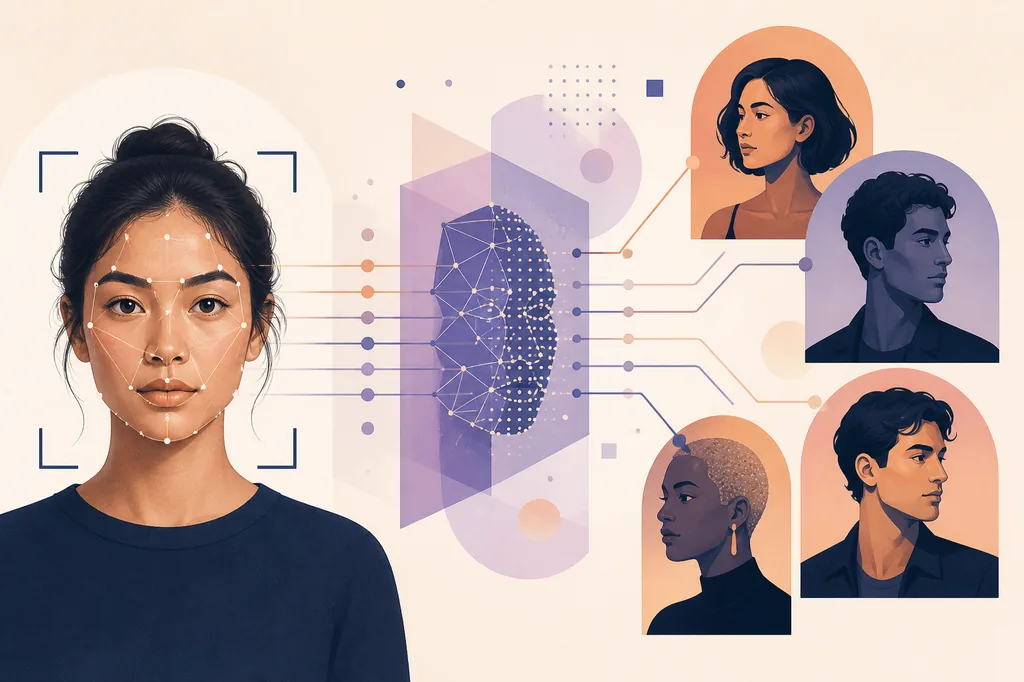
A dedicated AI celebrity look-alike system is usually a visual comparison service. It receives a portrait, detects a usable face, extracts visual signals, and compares those signals with a pool of celebrity images or prepared face representations. The output may be one top match, several candidates, a similarity percentage, or a short explanation of shared features.
That workflow is different from asking a general chatbot to guess a name. A dedicated matcher is designed around image comparison and ranking, while a chatbot is designed around language and explanation. Neither one should be treated as a reliable identity system. The useful question is not whether the AI has discovered your true celebrity twin; it is whether the photo contains enough stable visual cues for an entertaining, understandable comparison.
A good page also explains what happens when the input is weak. A group photo, extreme side angle, heavy filter, dark shadow, or face partly hidden by hair may produce a less stable result. A clear error or request to try another photo is more honest than pretending that every upload produces a precise answer.
- Input — A single portrait or selfie with a visible face and enough detail for comparison.
- Feature extraction — Visible patterns such as proportions, eye area, nose, mouth, cheeks, jaw, and overall framing.
- Ranking — A comparison against the service's available celebrity pool, with results that can vary by tool.
- Interpretation — A resemblance suggestion for entertainment, not a verified identity or biometric conclusion.
The result describes a photo
Read an AI celebrity look-alike result as a visual comparison of one image under one set of conditions. It is not a permanent label for your face.
Which facial cues can affect an AI match
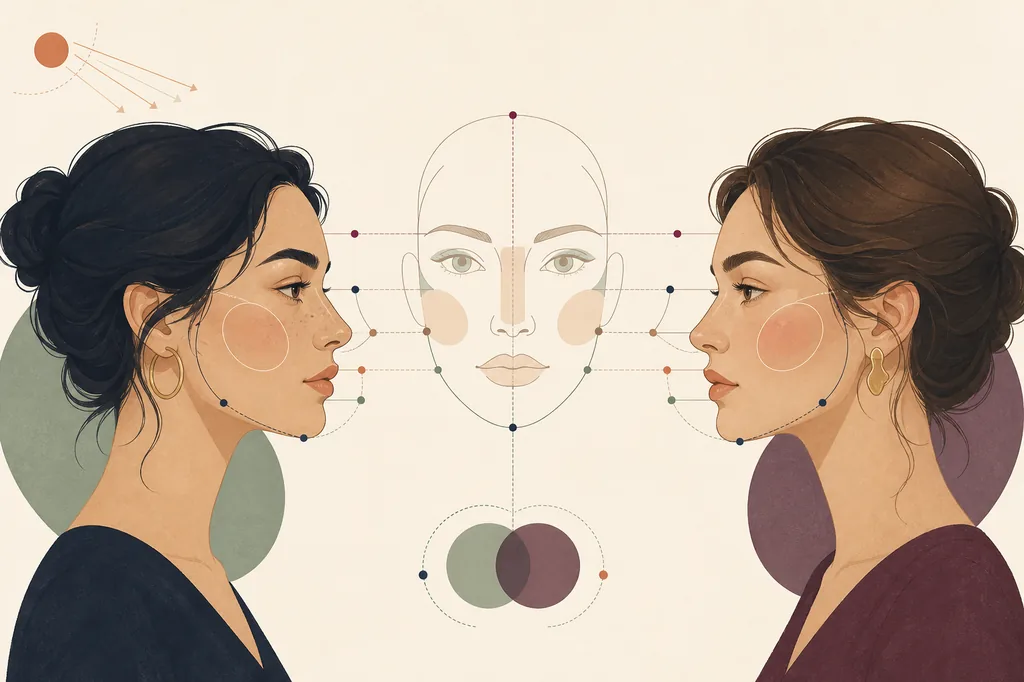
People often notice a resemblance before they can explain it. A face matcher tries to turn some of that impression into measurable or comparable visual patterns. It may consider the outline from forehead to jaw, the distance and angle of the eyes and brows, the structure of the nose, the shape of the mouth, cheekbone prominence, chin and jaw definition, and the balance of the face in the frame.
These cues are not isolated. Hair framing can change the apparent face shape, a smile changes the cheeks and eyes, and a camera lens can make the centre of the face look larger. A system may therefore return a celebrity who shares the overall geometry of the photo even when the person would not look as similar in a different pose. The explanation below a result is useful when it connects the name to visible cues rather than claiming a mysterious percentage is objective truth.
Representation also matters. A comparison pool that contains more people from one region, age range, profession, or media market can produce different results from another pool. That is a property of the service and its data, not a fact about your identity.
- Face shape — The broad outline created by the forehead, cheeks, jawline, and chin.
- Eyes and brows — Spacing, tilt, eyelid visibility, brow line, and the expression captured in the image.
- Nose and mouth — Central-feature proportions that can strongly influence the impression of resemblance.
- Cheeks and jaw — Contour, width, chin shape, and the way light falls across the lower face.
- Photo context — Angle, crop, lens, hairstyle, makeup, glasses, and lighting that shape the visible input.
Why the result changes between photos
Different results do not automatically mean that an AI celebrity look-alike tool is broken. The system sees pixels, not the person you know in the mirror. A slight head turn can change the apparent width of the nose and jaw. A smile changes the relationship between the cheeks, eyes, and mouth. Shadows can make one side of the face look sharper, while a wide-angle selfie can exaggerate the centre of the face.
The celebrity pool and ranking rules matter as well. One service may include more actors, singers, athletes, regional stars, or older images than another. A result can therefore reflect both the uploaded face and the set of comparison images available to the model. A match that appears in one tool is not a universal ranking that every other tool must reproduce.
If you want a fair retest, change one condition at a time. Keep the camera at a similar height, use a similar crop, and start with a neutral expression. Then compare whether the same broad cues or celebrity type return. Repeated patterns across two clear photos are more informative than one dramatic result from a heavily edited image.
- Angle — A side turn hides or changes the proportions that a front-facing comparison can see.
- Expression — Smiling, squinting, or tightening the mouth changes visible landmarks and contours.
- Light and lens — Backlight, hard shadows, distance, and wide-angle lenses alter the apparent geometry.
- Database — Different services compare against different celebrity pools and result rules.
Consistency beats a single high score
A repeated resemblance across similarly framed photos is a more useful signal than a one-off match produced by a filter, angle, or flattering shadow.
AI matcher vs quiz vs chatbot
Search results can use similar language for very different experiences. A photo-based AI matcher needs an image and returns a visual comparison. A manual quiz asks questions about hair, face shape, or style and produces a playful category. A general chatbot can help describe visible cues or explain why a result might feel plausible, but it is not the same as a dedicated ranking system.
Choosing the right format prevents a common frustration: expecting a quiz to analyse a face, or expecting a chatbot to provide a stable celebrity database match. If you do not want to upload a photo, a quiz or manual comparison is the more private option. If you want a ranked photo result, use the dedicated finder and check its privacy explanation before uploading. If you already have a result and want to understand it, a descriptive conversation can be useful without treating the name as proof.
- Use an AI photo matcher — When you want a ranked celebrity comparison from a clear selfie.
- Use a quiz — When you prefer a no-upload, casual experience based on answers and style.
- Use a chatbot — When you want feature descriptions, photo advice, or an explanation of an existing result.
How to prepare a better photo
The best starting image is usually a recent, single-person portrait with the face centred, the camera close to eye level, and soft light from the front or side. You do not need a studio setup. You do need enough detail to see the forehead, eyes, nose, mouth, cheeks, jaw, and chin without a strong shadow hiding one side.
Avoid group photos unless the page clearly lets you select the correct face. Remove sunglasses, hats, stickers, and heavy beauty filters for the baseline test. A hairstyle, beard, or makeup look can be part of the resemblance, but it can also dominate the result, so an unfiltered photo gives you a more useful reference. If the tool rejects the image, follow the error message rather than repeatedly uploading the same low-quality crop.
Once you have a baseline, you can test a second photo for a specific reason. Keep the face size and camera distance similar if you want to compare lighting. Change only the expression if you want to see how much a smile influences the result. This turns a casual upload into a clearer experiment.
- One visible face — Avoid ambiguity from group shots, mirrors, or faces partly hidden behind another person.
- Even lighting — Use soft front light and avoid a bright window behind you or a hard overhead shadow.
- Moderate distance — Leave enough room to show the face outline without severe wide-angle distortion.
- Minimal editing — Start without reshaping, smoothing, stickers, or strong colour effects.
Start with a clean baseline
One clear, unfiltered portrait gives you a better reference for interpreting the next result than several inconsistent uploads.
How to read a similarity score
A similarity percentage can make a result look more precise than it really is. The number usually belongs to the service's own ranking method, comparison pool, and threshold. It is not automatically a probability that you are related to a celebrity, and it should not be read as an official measurement of attractiveness or identity.
Look at the whole result. Does the page explain which visible features influenced the match? Does the same general celebrity type appear when you use a second clear photo? Are the suggested images similar in pose and styling, or does the resemblance still make sense when those details change? Those questions give you more context than a single high number.
A responsible result page should also show boundaries. It should say that the output is for entertainment or visual comparison, avoid identity claims, and make it easy to try another photo when the face is unclear. Clear limitations are a quality signal because they prevent users from treating an uncertain comparison as a fact.
- Treat the number as internal — A score helps rank results within one service; it is not a universal probability.
- Read the explanation — Shared face shape, eyes, smile, jaw, or styling cues are more useful than a bare percentage.
- Compare carefully — Use a second similar-quality photo before deciding that a match is stable.
- Respect the boundary — A resemblance result should never become identity verification or a serious decision rule.
Privacy checks before uploading
A face photo is personal even when the goal is only entertainment. Before using an AI celebrity look-alike tool, find its privacy policy and look for plain-language answers: Is the image kept after analysis? Is it used to improve a model? Can a service provider access it? Is an account required? How can you request deletion? If the page does not explain the basics, pause before sharing more photos.
Only upload images you have the right to use. Do not submit another person's photo without permission, and avoid documents, medical images, children's photos, or private scenes that reveal more than the match requires. One suitable portrait is usually enough for a first test; additional uploads increase exposure without guaranteeing a better answer.
Official privacy guidance distinguishes casual resemblance from formal biometric recognition, but the practical habit is the same: minimise the data you share and choose services that explain their processing. A fun result is not worth unclear retention or unexpected reuse. Review the site's own policy because practices differ between providers and can change over time.
- Retention — Check whether the image is temporarily processed, stored for a period, or deleted after analysis.
- Training and sharing — Look for statements about model improvement, vendors, analytics, or third-party access.
- Permission — Use your own photo or confirm that you have permission to analyse someone else's image.
- Minimum disclosure — Upload the least sensitive image and profile information needed for the intended comparison.
Privacy clarity is part of tool quality
Choose a service that explains what it needs, why it needs it, and what happens to the photo after the comparison.
Choose the right look-alike page
A broad AI celebrity look-alike question does not always need a new kind of tool. Start with the main celebrity look-alike finder when you want a mixed comparison across actors, singers, athletes, models, and other public figures. Use an actor or actress page when the category matters more than the widest possible pool. Choose a doppelganger page when you want a famous-twin framing and a closer discussion of resemblance language.
If your question is about how to get a fair result, read the photo guide before uploading. If your question is whether a chatbot can name a celebrity from a face, read the ChatGPT guide instead of treating every AI product as interchangeable. Matching the page to the intent keeps the result easier to understand and avoids repeating the same upload with no clear reason.
- Broad celebrity match — Use the existing finder for a general answer to what celebrity do I look like.
- Actor or actress match — Use a performer-focused page when the result should stay inside that category.
- Famous-twin framing — Use the doppelganger page when the stronger double-like wording fits your question.
- AI explanation — Use this guide when you want to understand the system, photo variables, score, and privacy before or after a test.
Which celebrity look-alike approach fits your goal?
The same search phrase can lead to different page types. Choose the experience that matches the question you actually want answered.
| Approach | Best for | What you get | Main limit |
|---|---|---|---|
| AI photo matcher | A ranked result from a selfie | Visual comparison, possible score, and match explanations | Depends on photo quality, database, and model rules |
| Manual quiz | A no-upload, playful experience | A category or style-based celebrity suggestion | Does not compare the actual face image |
| General chatbot | Explaining cues or an existing result | Photo advice, descriptions, and conversational context | Not a dedicated celebrity ranking database |
| Side-by-side comparison | Checking whether a suggested match feels plausible | Human review of face shape, eyes, smile, jaw, and styling | People can be biased by pose, makeup, and memory |
Celebrity Look Alike AI FAQ
Helpful reference guidance
- NIST Face Technology Evaluations — Official context for evaluating face technologies and separating technical recognition tasks from casual visual comparison.
- ICO Biometric Recognition Guidance — Official guidance on transparency, data minimisation, accuracy, and responsible handling of biometric information.
Related Celebrity Look-Alike Pages
- Celebrity Look-Alike Finder — Upload a clear photo when you want a direct broad celebrity comparison.
- AI Celebrity Look-Alike Finder — Upload a photo for the AI-focused celebrity comparison described in this guide.
- How to Find Your Celebrity Look Alike — Follow a practical photo-first workflow before you run a match.
- ChatGPT Celebrity Look Alike — Understand what a general chatbot can and cannot do with look-alike questions.
- Best Celebrity Look-Alike Apps and Sites — Compare tool types, match depth, privacy notes, and practical tradeoffs.
- Celebrity Doppelganger Finder — Use the famous-twin framing when a broad match is not specific enough.
Last updated: August 11, 2026