Find Your Closest Celebrity Matches
Upload one clear selfie or portrait to find broad celebrity lookalike matches. This tool is for photo-based resemblance, not a quiz or identity verification.
Upload a clear photo to use this celebrity look alike finder. See broad public-figure matches, the visible cues behind them, and what to try when a result changes.

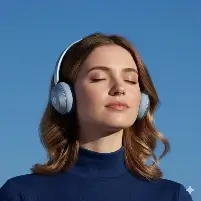
Use one clear, front-facing photo with one person; drag, click, or paste an image.
These examples show the kind of match presentation users expect from a strong celebrity face match experience.
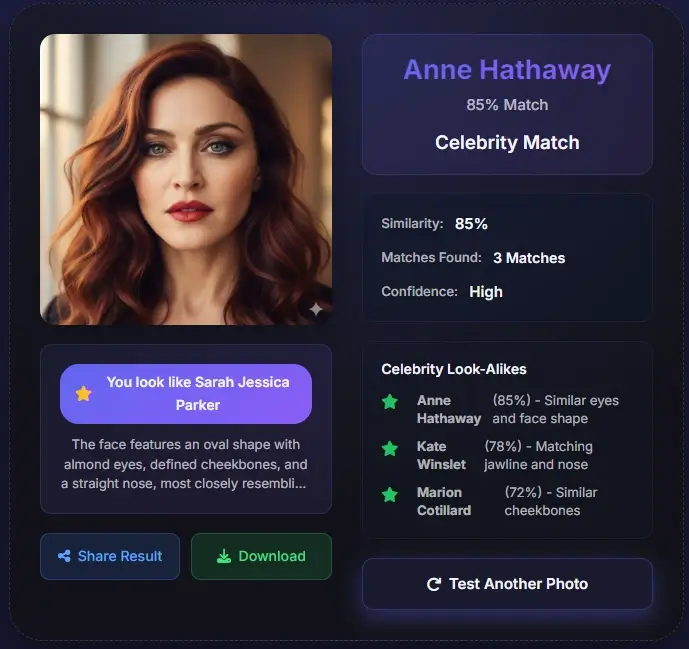
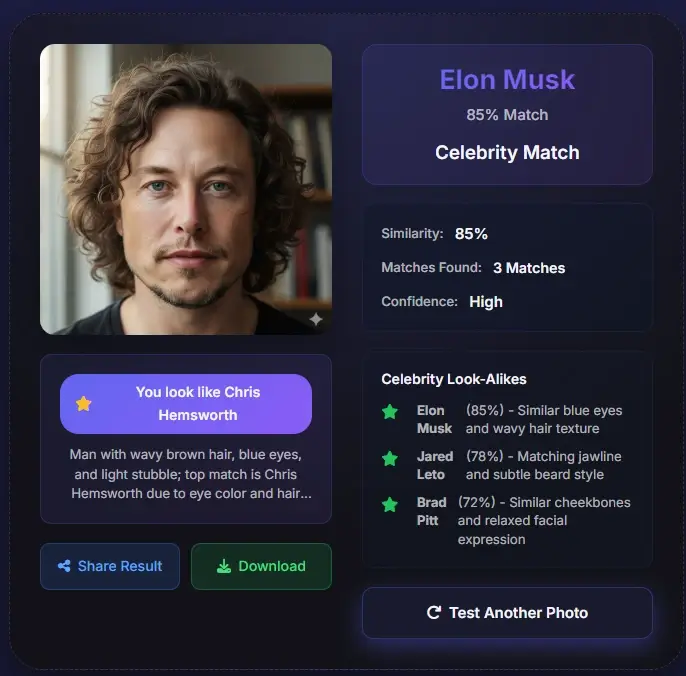
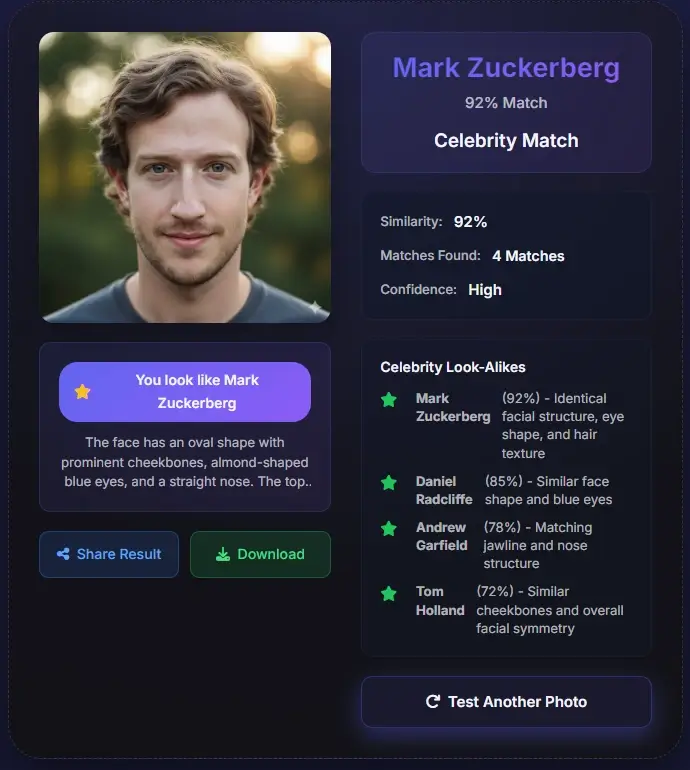
This page puts the celebrity look alike finder first: upload a photo, review a broad match, then use the guidance to improve the next image.
Upload one clear selfie or portrait to find broad celebrity lookalike matches. This tool is for photo-based resemblance, not a quiz or identity verification.
Strong pages in this space do not stop at a single celebrity name. Users also want to know whether the match comes from face shape, eye spacing, cheekbone structure, jawline definition, nose shape, lip shape, or overall facial balance.
Search intent here is highly action-driven. Most users want to upload a photo within seconds, get their top matches quickly, and either share the result or try another image to compare outcomes. This page therefore combines instant tool use with photo tips, privacy expectations, and realistic explanations.
Start with one clear, front-facing photo of one person. Good lighting and a visible face help the celebrity look alike finder compare the image more consistently.
After upload, the tool analyzes visible traits such as face shape, eye area, nose structure, lips, cheekbones, and jawline, then compares those signals with a celebrity dataset.
Review the broadest celebrity matches and the visible reasons behind them. If you need a narrower actor or doppelganger intent, use the related existing finder instead of mixing topics on this page.
This query usually signals a mix of curiosity and action. Some users want a quick answer to the question "who do I look like?" Others want a shareable result for social media, a fun conversation starter, or a visual way to compare their own features with well-known actors, singers, athletes, and public figures. What they usually do not want is filler. They want an upload tool near the top, quick guidance on how to use it, and enough explanation below the fold to feel that the result is credible and worth trying again.
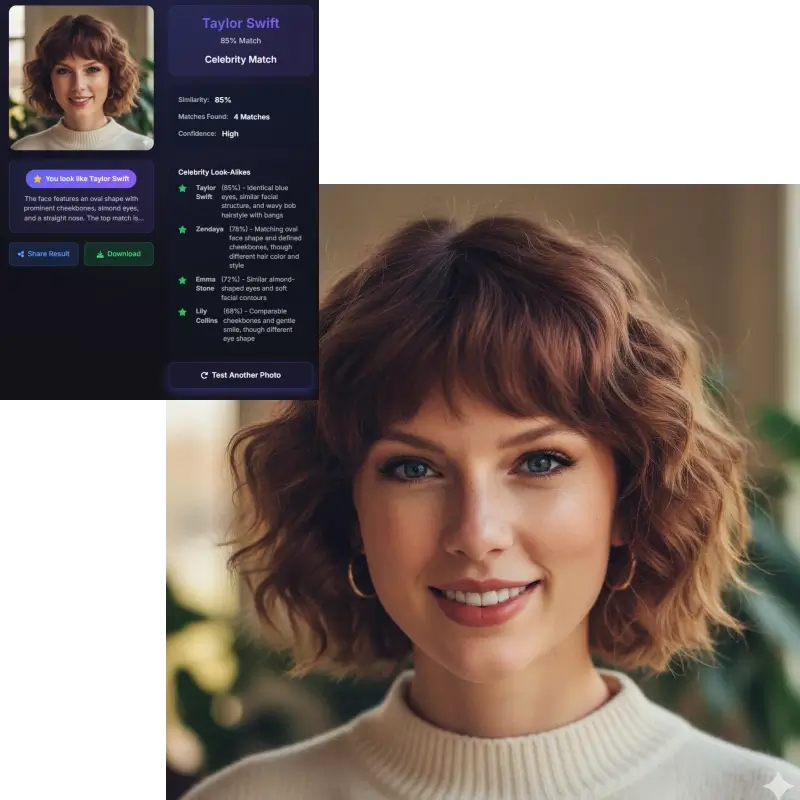
A celebrity face match result is typically based on visible facial similarity, not on identity verification. In practice, the system looks for recurring visual patterns in the uploaded face and compares them with known celebrity images. These patterns may include face shape, eye position and spacing, nose structure, lip outline, cheekbone prominence, jawline contour, and overall facial balance in that specific photo. Better lighting and clearer photos usually lead to more stable comparisons.
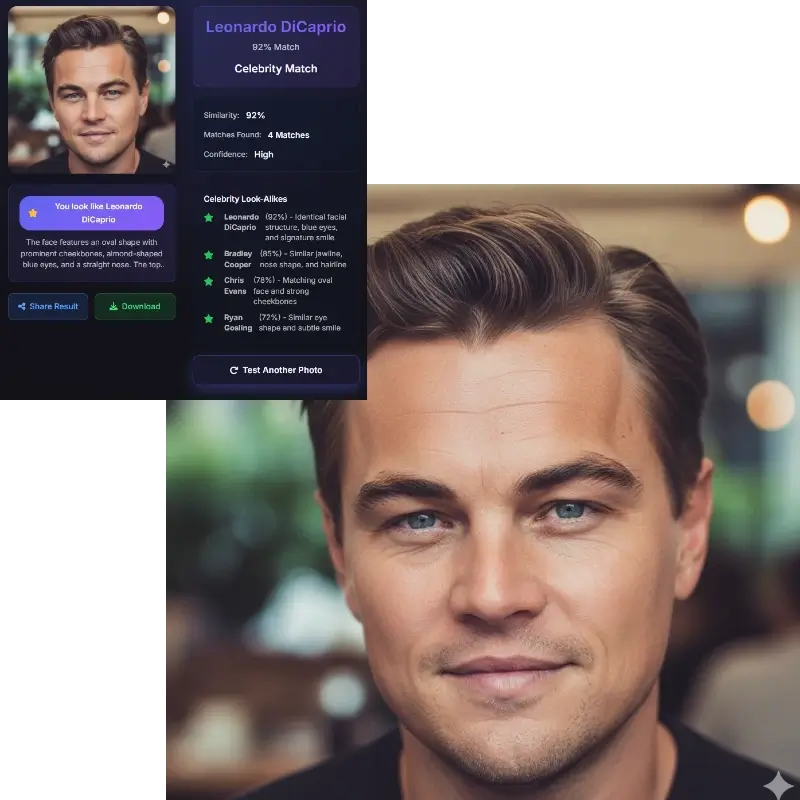
A page targeting this query should not bury the tool under a long article, but it also should not leave the user without context. That is why this page keeps the upload area at the top, then follows with the content people most often need after the first result: how the match is formed, what photo works best, and what to expect from the result.
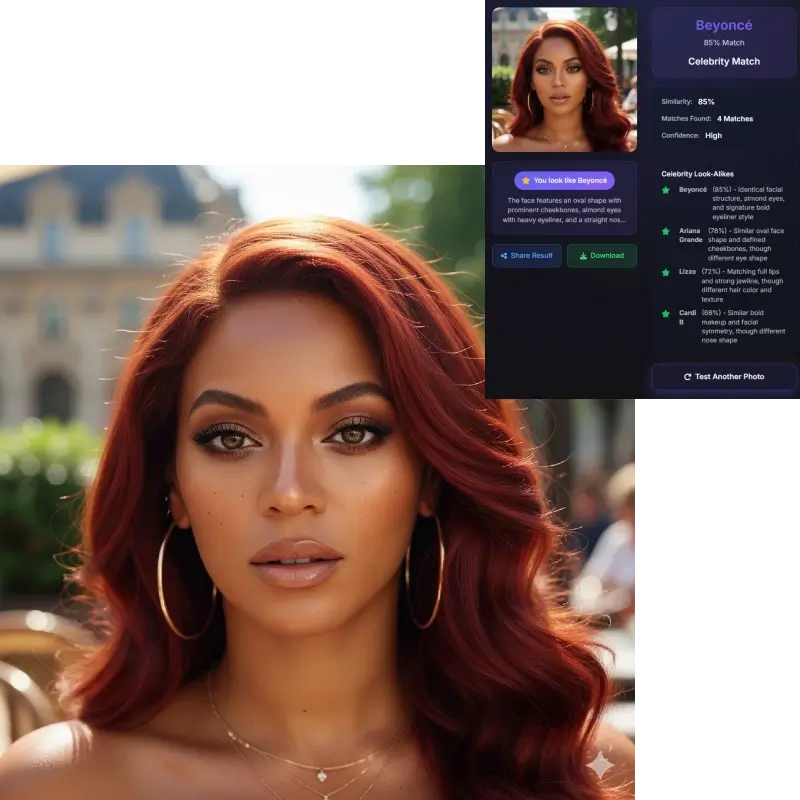
Users often treat celebrity doppelganger finder and celebrity face match as closely related searches. The best experience usually includes a fast upload flow, several matches instead of just one, short explanations that connect the match to visible features, and realistic boundaries about image quality, angle, expression, and styling.
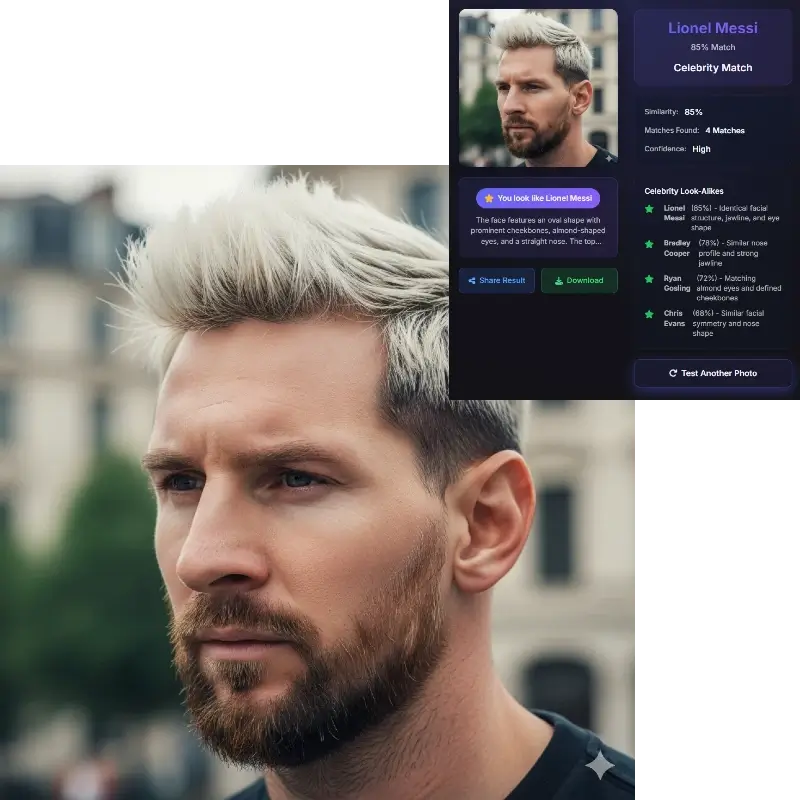
Similarweb keyword data shows that users often search for celebrity look alike finder, celebrity lookalike finder, and what celebrity do I look like upload photo as the same practical task. The most useful result usually starts with a sharp single-person portrait, then compares several visible cues instead of relying on one feature. If your first result looks surprising, test another photo with similar lighting and no heavy filter. A match that repeats across photos is more helpful than a one-time result caused by shadow, crop, hairstyle, or expression.
The tool can only compare what the image reveals, so better inputs usually create cleaner and more understandable outputs.
Single-person photos help the system focus on one set of facial landmarks. Group shots, reflections, or crowded scenes can weaken the comparison or produce unstable matches.
A straight or near-straight angle makes it easier to compare symmetry, eye spacing, and jawline structure. Extreme side angles often hide details that matter for celebrity face match quality.
Soft, balanced light usually gives the tool a more accurate view of facial contours. Harsh shadows can change how cheekbones, nose shape, and eye depth appear in the photo.
Beauty filters, face reshaping, skin smoothing, and strong contrast edits may change the visible features being compared and can lead to less natural celebrity look alike results.
Different photos of the same person can highlight different facial cues, so a new image may lead to a new top celebrity match.
Small head turns can alter the apparent width of the jaw, the placement of the eyes, and the shape of the nose in the frame, which affects similarity calculations.
Smiling, squinting, raising eyebrows, or tightening the mouth changes the image the system sees. That can make you resemble a different celebrity in that moment.
Low-quality or compressed images remove subtle feature information, making it harder for the system to compare structure with confidence.
The result is a best-match comparison based on this specific photo. It is not identity recognition and it is not proof that one celebrity is your exact twin.
Users are increasingly careful about face-based tools, so a useful page should set clear expectations before upload.
One of the first trust questions is simple: does the site keep the uploaded image after analysis? If the answer is yes, users want retention details. If the answer is no, they still want that stated clearly.
It is safer and more honest to describe the experience as a facial similarity tool rather than promise perfect accuracy, zero bias, or exact scientific certainty from one uploaded selfie.
A short explanation that results depend on angle, lighting, expression, image quality, and visible facial structure helps the user interpret the output more realistically.
Uploads should be treated as personal images. Use clear photos for entertainment-based similarity results, avoid submitting images you do not have permission to use, and review the privacy policy before uploading sensitive photos.
A celebrity look alike finder is a photo-based tool that compares the visible features in your uploaded image with a celebrity database and returns the closest celebrity matches. The result usually comes from signals such as face shape, eye spacing, nose structure, lips, cheekbones, and jawline.
You upload a clear selfie or portrait, and the tool analyzes visible facial landmarks and broader facial proportions. It then compares those signals with known celebrity faces to produce a ranked list of likely matches. Many users try more than one image because resemblance is subjective and photo dependent.
A single-person, front-facing, well-lit photo tends to work best. Clear images help the system compare your visible features more consistently, while sunglasses, heavy filters, blur, strong side angles, and face coverings can reduce match quality.
Different photos change how the face appears to the system. A smile can alter the mouth and cheek area, a side angle can change the jawline and nose profile, and uneven lighting can make the same person look different in the frame. A new photo can naturally lead to a new set of celebrity matches.
No. They are best understood as similarity-based outputs, not exact statements of fact. The tool is showing which celebrity faces look most similar according to the uploaded image, not providing identity verification.
The experience is primarily entertainment-focused, but many users also enjoy the feature-level explanation that comes with the result. Seeing why a match appears can help you understand how face shape, eye spacing, or jawline definition influence first impressions in photos.
Yes. Uploading one clear portrait can produce a useful closest lookalike result, but the match is based on the visible photo. For a steadier answer, compare two or three front-facing photos with similar lighting.
This celebrity look alike finder can return broad public-figure matches, including actors, singers, athletes, models, and internet personalities. The actor finder keeps the intent narrower and focuses on actor, actress, Hollywood, and movie-star matches.
Start with a clear front-facing photo of one person, avoid strong filters, and compare a second image if the result changes. This page covers broad celebrity lookalike finder intent; use the actor or doppelganger pages for narrower searches.
Yes. It compares visible facial structure with broad celebrity references to answer who-do-I-look-like searches. Treat the result as an entertainment-based resemblance estimate, not identity verification.
Upload a clear selfie, compare facial features, and see which celebrities look the most like you in this photo.