ChatGPT Celebrity Look Alike: What It Can and Cannot Do
A practical guide to the popular ChatGPT celebrity look-alike question: what AI can describe, where identity limits apply, and how to get a safer, more useful resemblance result.
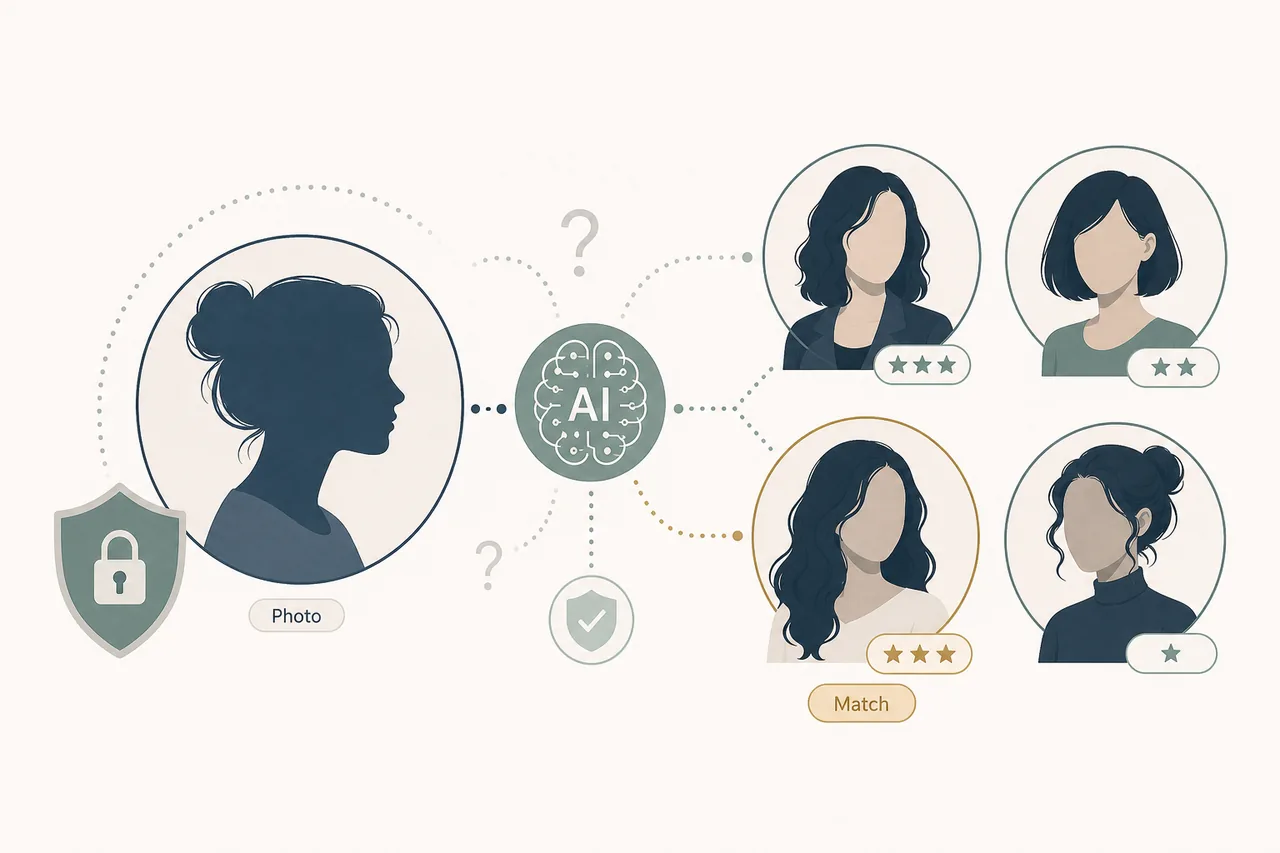
Table of Contents
Searches for ChatGPT celebrity look alike usually come from a simple curiosity: can you upload a selfie and ask ChatGPT which famous person you resemble? The useful answer is more nuanced than yes or no. A general chatbot can explain photo cues and help you think about face shape, lighting, expression, and style, but a purpose-built look-alike tool is better for ranked celebrity matches from an uploaded photo.
Can ChatGPT Find Your Celebrity Look Alike?
ChatGPT is helpful when the task is descriptive: explaining why a photo might feel similar to a certain screen type, helping you write a neutral prompt, or turning visible face cues into a checklist. It can also help you compare non-sensitive, user-provided descriptions such as oval face, wide smile, dark brows, and soft jawline with broad celebrity categories.
Where people get frustrated is expecting ChatGPT to act like a face-recognition database. A celebrity look-alike result depends on comparing facial structure against many public figures, ranking similarity, and explaining uncertainty. That is a different job from free-form conversation, and it raises privacy, accuracy, and identity-safety concerns when photos of real people are involved.
The best workflow is to separate the jobs: use ChatGPT for explanation, prompt writing, and result interpretation; use a dedicated look-alike finder when you want a ranked match list from a selfie. Then read the result as a visual resemblance in one photo, not as identity verification or a permanent label.
Use ChatGPT for guidance, not proof
If your goal is who do I look like, a dedicated look-alike tool gives a clearer answer. If your goal is why did this match happen, ChatGPT is useful for interpreting face-shape, expression, lighting, and styling cues.
ChatGPT vs a Dedicated Celebrity Look-Alike Tool
Both can be useful, but they solve different parts of the search intent. Treat the difference as guidance versus matching.
| Option | Best for | Limits |
|---|---|---|
| ChatGPT | Explaining photo cues, writing safer prompts, comparing descriptions, and interpreting why a result may feel plausible. | It is not a dedicated celebrity face database and should not be used as proof that someone is a specific person or celebrity. |
| Dedicated celebrity look-alike finder | Uploading a selfie, getting ranked celebrity matches, and seeing a photo-based resemblance result quickly. | Results still depend on lighting, angle, expression, database coverage, and image quality. |
| Manual side-by-side comparison | Checking whether a suggested match actually shares face shape, eyes, smile, jawline, or styling. | Manual comparison can be biased by hair, makeup, clothing, role memory, or one flattering angle. |
A Safer Workflow for Celebrity Look-Alike Questions
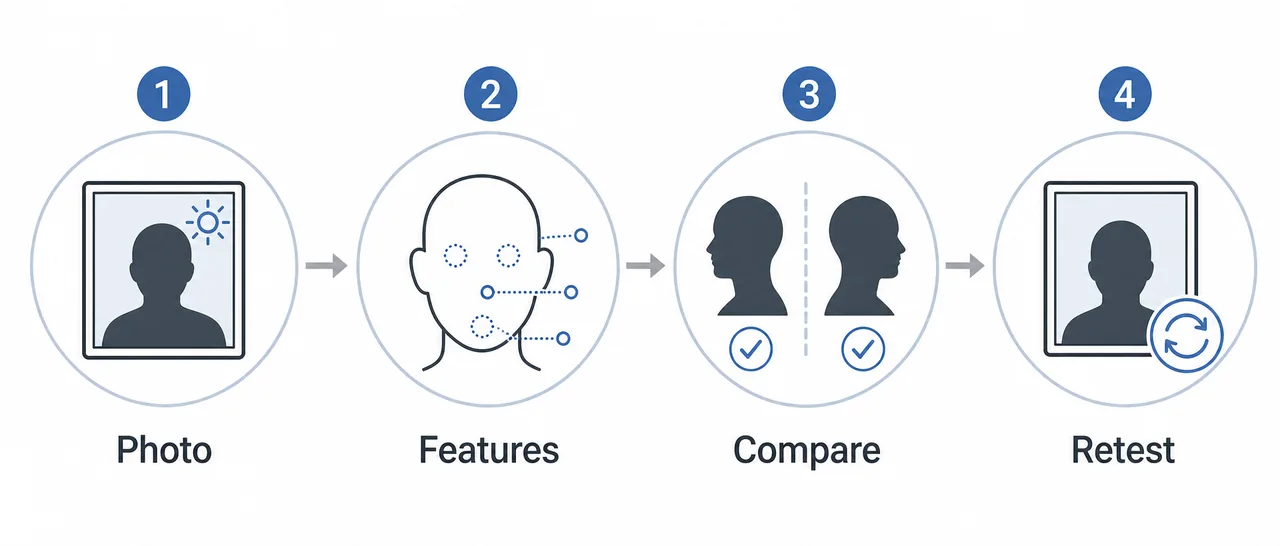
If you want to involve ChatGPT without turning it into an identity tool, keep the request focused on visible, non-identifying explanation and use a photo matcher only when you want the ranked result.
- Start with a clear photo - Use one face, even lighting, and minimal filters. A blurry, angled, or heavily edited image can change any look-alike result.
- Ask for feature descriptions - Instead of asking for a direct identity match, ask for observable traits: face shape, brow style, smile shape, jawline, photo angle, and styling cues.
- Use a dedicated matcher for rankings - Run the photo through a celebrity look-alike finder if you want names, scores, or a ranked list of possible matches.
- Ask ChatGPT to interpret the result - Share the non-sensitive result text or your own description and ask why a match may appear: shared jawline, eye spacing, smile, styling, or camera angle.
- Retest with a second photo - A different expression or angle can produce a different top match. Two or three similar-quality photos give a more realistic sense of stability.
Prompt Examples That Stay Useful
The safest prompts avoid demanding identity verification from a face. They focus on description, comparison criteria, and result interpretation.
| Intent | Prompt example | Why it works |
|---|---|---|
| Describe face cues | Describe visible face-shape and styling cues in this photo without identifying the person. | It asks for observable features rather than a named identity. |
| Improve a selfie | What changes would make this photo better for a celebrity look-alike tool? | It focuses on photo quality: lighting, angle, filters, and framing. |
| Interpret a match | A tool matched this photo with a classic movie-star look. What facial or styling cues could explain that? | It explains a result without claiming certainty. |
| Compare two results | Why might two different photos of the same person return different celebrity matches? | It sets expectations about angle, expression, and image dependence. |
Privacy, Accuracy, and Expectations
Face photos are personal data in many contexts, so do not upload images casually to every tool that promises a fun match. Prefer services that clearly explain how uploads are processed, whether images are stored, and how to delete or avoid account-linked history.
Accuracy is also limited. A celebrity look-alike result may be influenced by hair, beard, makeup, age, expression, lighting, camera lens, ethnicity representation, and the celebrities available in the comparison pool. A strong match in one selfie can become weaker in a profile shot.
The healthiest way to use these tools is for entertainment, styling inspiration, or photo curiosity. Do not use a celebrity look-alike result to identify strangers, make claims about someone else, or judge personal worth.
Treat uploads as personal
Use clear photos only when you are comfortable uploading them, choose tools with visible privacy expectations, and remember that look-alike results are photo-dependent resemblance estimates.
ChatGPT Celebrity Look Alike FAQ
Notes and Sources
- Similarweb keyword generator validation on June 28, 2026 showed chatgpt celebrity look alike with low difficulty and meaningful recent traffic in phrase-match and related-keyword tabs, while broader upload-photo terms mapped to existing tool pages.
- SERP review on June 28, 2026 found mixed intent: users want ChatGPT-specific guidance, direct look-alike tools, and policy/accuracy explanations. This guide separates guidance, matching, privacy, and prompt examples.
- OpenAI public policy and help materials emphasize responsible AI use, privacy expectations, and avoiding unsafe identity-style uses of images; this article keeps the advice focused on non-identifying description and entertainment-oriented resemblance.
Last updated: June 28, 2026