Find a Closest Lookalike
Upload one clear portrait to compare visible facial cues with familiar public figures. The result is a resemblance estimate, not a quiz or identity check.
Upload a clear photo to use a look alike finder. See a closest famous-face match, understand the visible cues, and test another image when results change.

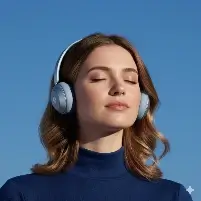
Use one clear, front-facing photo with one person; a neutral, well-lit image gives a more consistent comparison.
These examples show how a photo-based look alike finder can present a closest famous-face resemblance without claiming an exact identity.
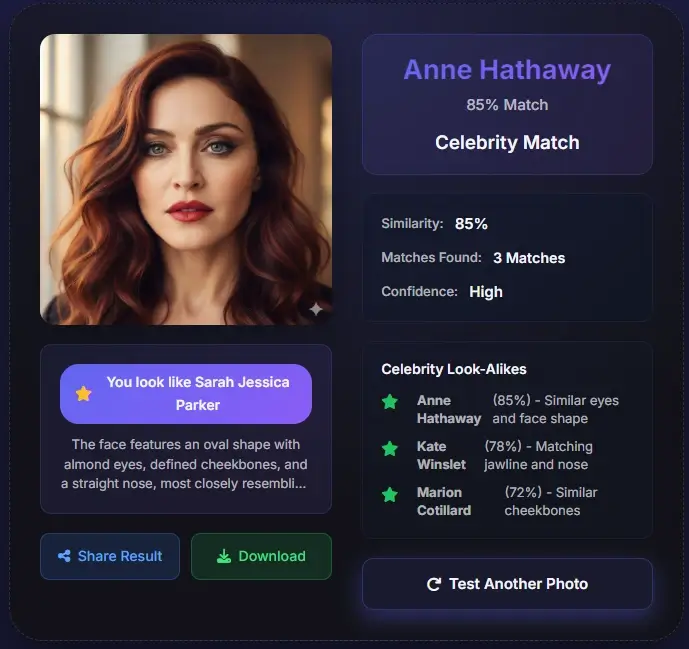
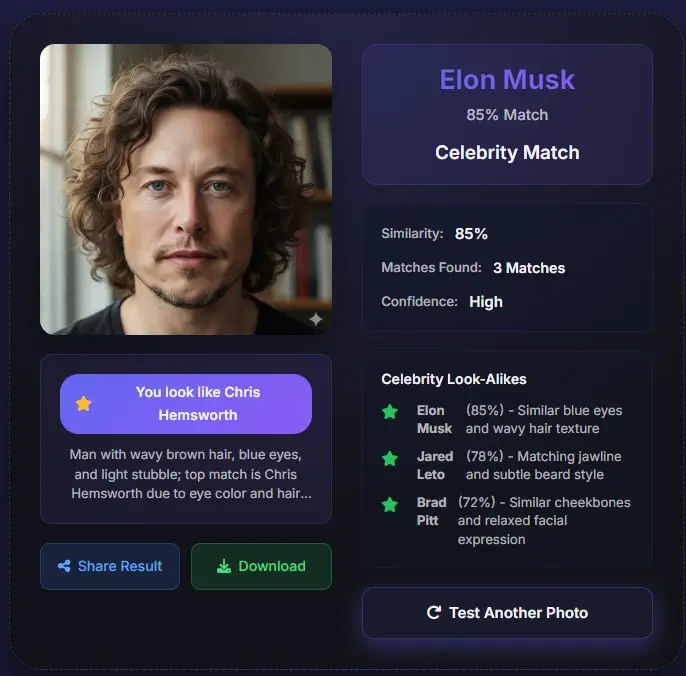
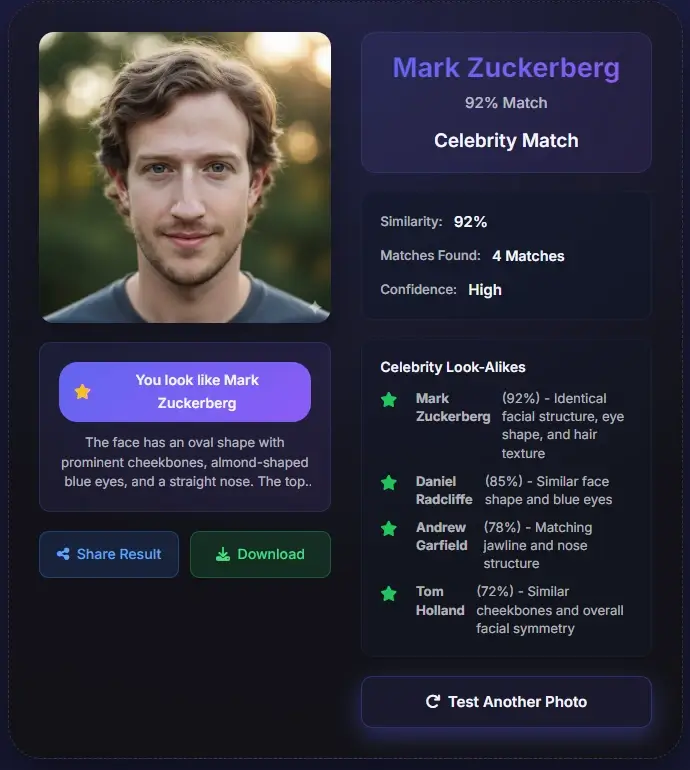
Start with the broad look alike finder task: upload a photo, review the closest resemblance, then use the guidance to improve a second comparison.
Upload one clear portrait to compare visible facial cues with familiar public figures. The result is a resemblance estimate, not a quiz or identity check.
The result can reflect face shape, eye spacing, nose structure, lips, cheekbones, jawline, expression, and the way the photo is framed.
A second image helps you tell a repeatable lookalike pattern from a one-off result caused by lighting, angle, crop, or expression.
Choose one front-facing photo with one visible face. Even lighting and a natural expression give the look alike finder a cleaner baseline.
The page reads visible facial structure and compares the image with famous-face references before ranking likely matches.
Read the top match, similarity wording, and feature notes. Try another clear photo if you want to check whether the resemblance repeats.
The query usually combines curiosity with a quick action: people want to know who they resemble, see a shareable result, or compare a photo with a familiar public figure. The useful experience puts the upload first and explains the result without overpromising.
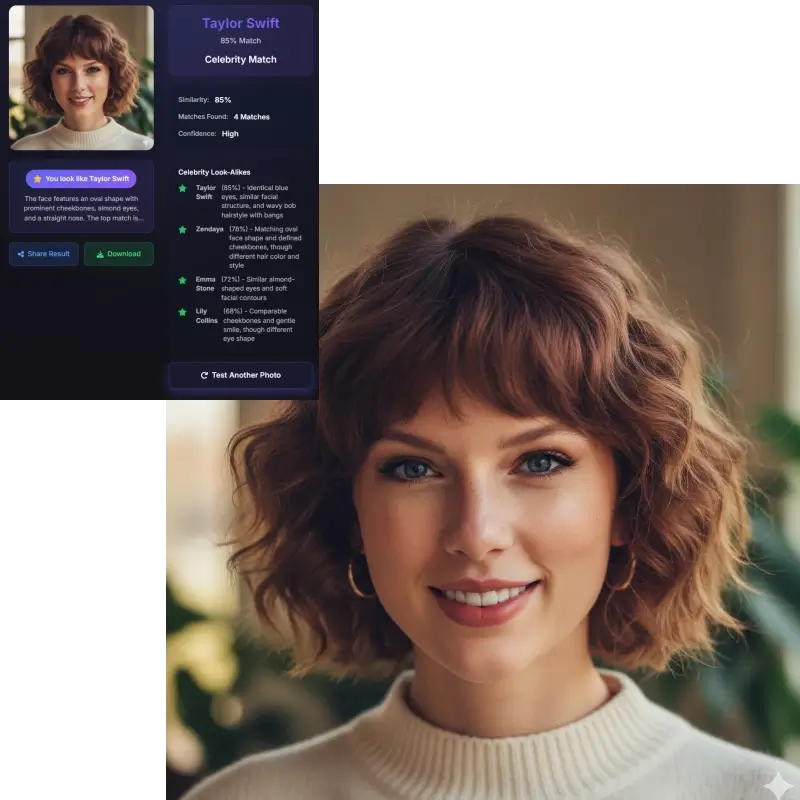
A lookalike result compares visible patterns in one image, such as face outline, eye position, nose profile, lip shape, cheekbones, jawline, and overall balance. It does not verify identity or prove an exact twin.
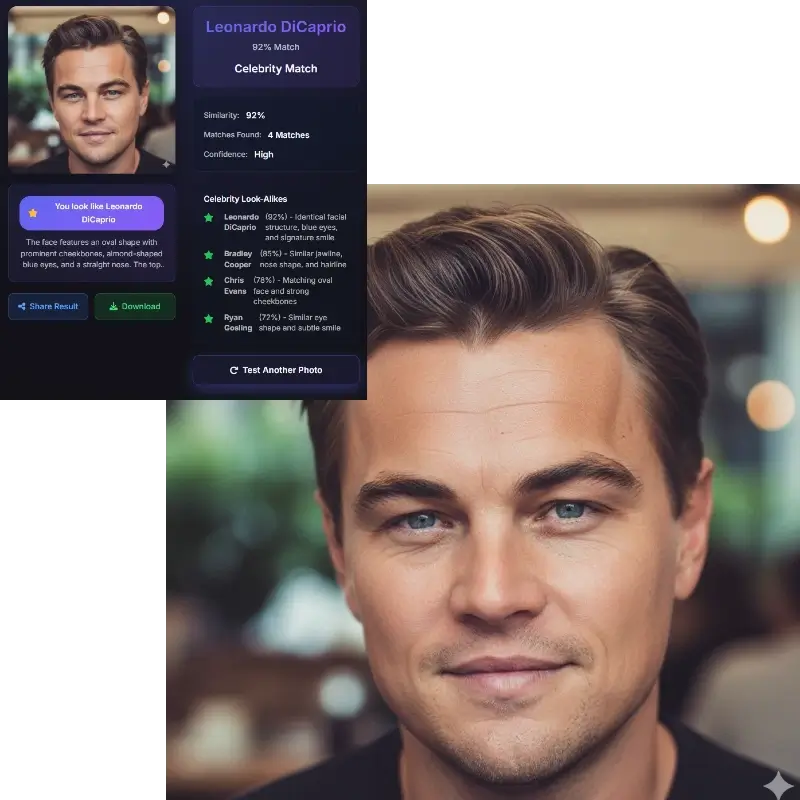
If the first match feels surprising, use a second front-facing image with similar lighting. Consistent results are more useful than a single result shaped by shadow, crop, hairstyle, or expression.
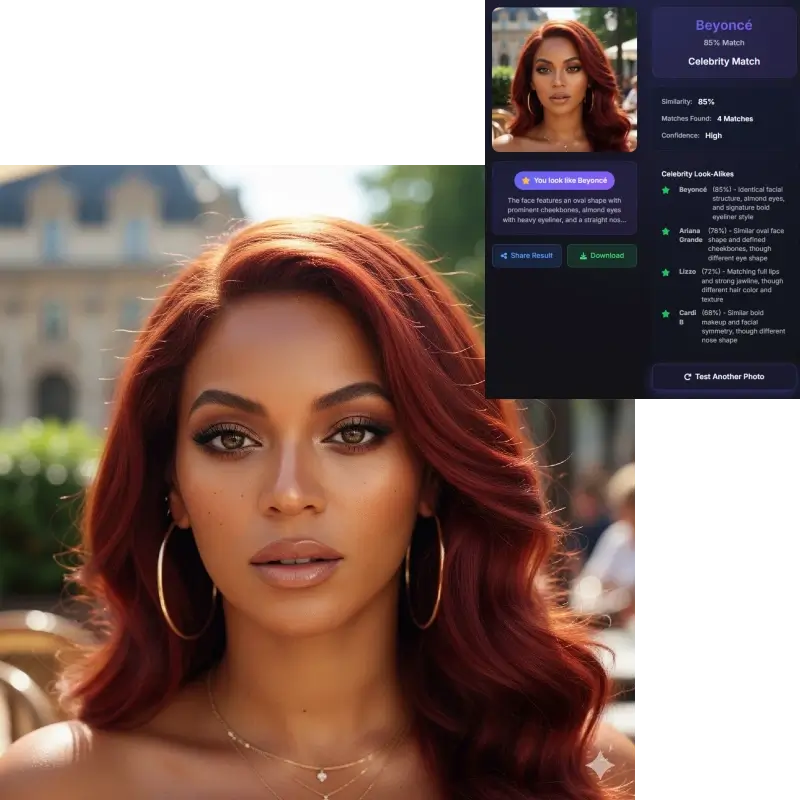
A photo-based finder can only compare what the frame reveals. Filters, glasses, hats, blur, side angles, and strong expressions can change the visible cues and lead to a different famous-face match.
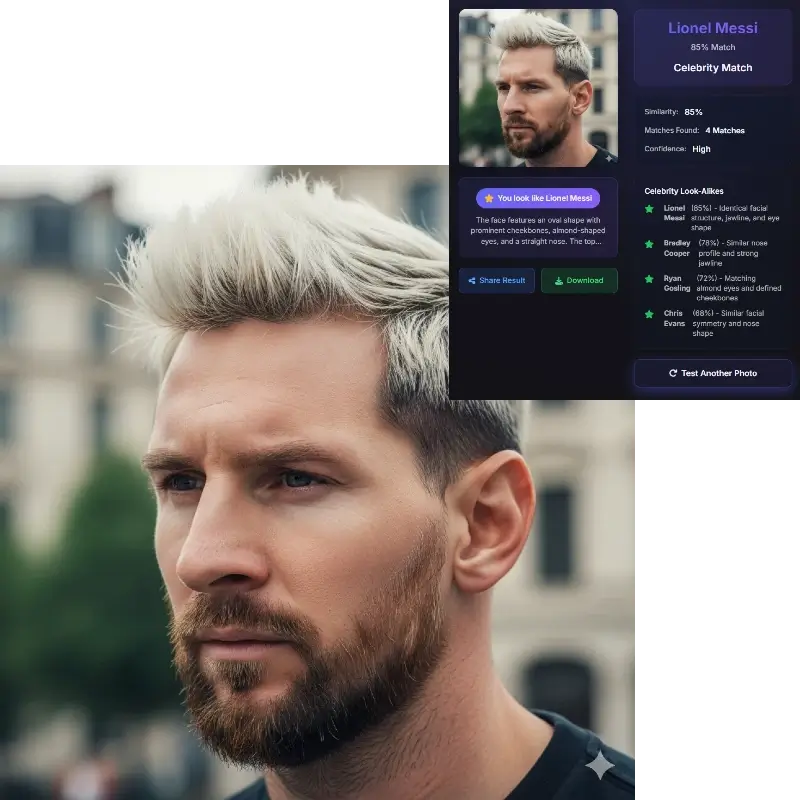
Use one face, a sharp image, soft light, and a neutral expression. Then read the match as entertainment-based visual comparison and choose a narrower actor or doppelganger tool only when that is your real intent.
The tool can compare only the details your image makes visible, so a clean input usually creates a steadier result.
Single-person photos help the system focus on one set of facial landmarks. Group shots, reflections, or crowded scenes can weaken the comparison or produce unstable matches.
A straight or near-straight angle makes it easier to compare symmetry, eye spacing, and jawline structure. Extreme side angles often hide details that matter for celebrity face match quality.
Soft, balanced light usually gives the tool a more accurate view of facial contours. Harsh shadows can change how cheekbones, nose shape, and eye depth appear in the photo.
Beauty filters, face reshaping, skin smoothing, and strong contrast edits may change the visible features being compared and can lead to less natural celebrity look alike results.
Different photos highlight different facial cues. A new image can produce a new closest match without meaning that either result is an identity statement.
Small head turns can alter the apparent width of the jaw, the placement of the eyes, and the shape of the nose in the frame, which affects similarity calculations.
Smiling, squinting, raising eyebrows, or tightening the mouth changes the image the system sees. That can make you resemble a different celebrity in that moment.
Low-quality or compressed images remove subtle feature information, making it harder for the system to compare structure with confidence.
The result is a best-match comparison based on this specific photo. It is not identity recognition and it is not proof that one celebrity is your exact twin.
A responsible look alike finder should be clear about what a photo comparison can show and what it cannot prove.
Upload an image you have permission to use. Avoid IDs, documents, children, medical images, or private scenes in the frame.
The result estimates visible similarity to public figures. It is not identity verification, a biometric decision, or proof that two people are related.
Angle, lighting, crop, expression, hairstyle, and accessories can shift the match. Compare another good photo when consistency matters.
Use clear photos for entertainment-based similarity results, avoid uploading sensitive images, and review the privacy policy before testing a face photo.
A look alike finder is a photo-based tool that compares visible facial cues with a reference set of famous faces and returns the closest resemblance. It is designed for entertainment, not identity verification.
Upload a clear portrait and the tool reviews visible structure such as face shape, eye spacing, nose, lips, cheekbones, jawline, expression, and framing. It then ranks likely lookalike matches for that image.
Use one person, a front-facing view, even light, a sharp image, and a natural expression. Sunglasses, heavy filters, blur, strong side angles, and face coverings can reduce consistency.
Each photo reveals a different combination of angle, expression, lighting, crop, hairstyle, and accessories. A new frame can therefore change the ranked resemblance without changing who you are.
No. The output is a similarity estimate from one image. It should not be read as exact identity, scientific proof, or a claim that you are the same person as a public figure.
One clear portrait can return a useful closest match, but comparing two or three similar photos helps you see whether the resemblance repeats or depends on one unusual angle.
A broad look alike finder covers the general task of finding a visual resemblance. The celebrity finder narrows the reference set and wording to famous public figures, while actor and doppelganger pages serve more specific searches.
This celebrity look alike finder can return broad public-figure matches, including actors, singers, athletes, models, and internet personalities. The actor finder keeps the intent narrower and focuses on actor, actress, Hollywood, and movie-star matches.
Start with a clear front-facing photo of one person, avoid strong filters, and compare a second image if the result changes. This page covers broad celebrity lookalike finder intent; use the actor or doppelganger pages for narrower searches.
Yes. It compares visible facial structure with broad celebrity references to answer who-do-I-look-like searches. Treat the result as an entertainment-based resemblance estimate, not identity verification.
Upload a clear photo, review the visible resemblance, and try another image when you want a steadier comparison.