Oval Face Shape Celebrities: 8 Examples and Key Signs
Study commonly cited celebrity examples, learn what makes a face read as oval, and avoid confusing balanced oval proportions with round, oblong, heart, or diamond shapes.

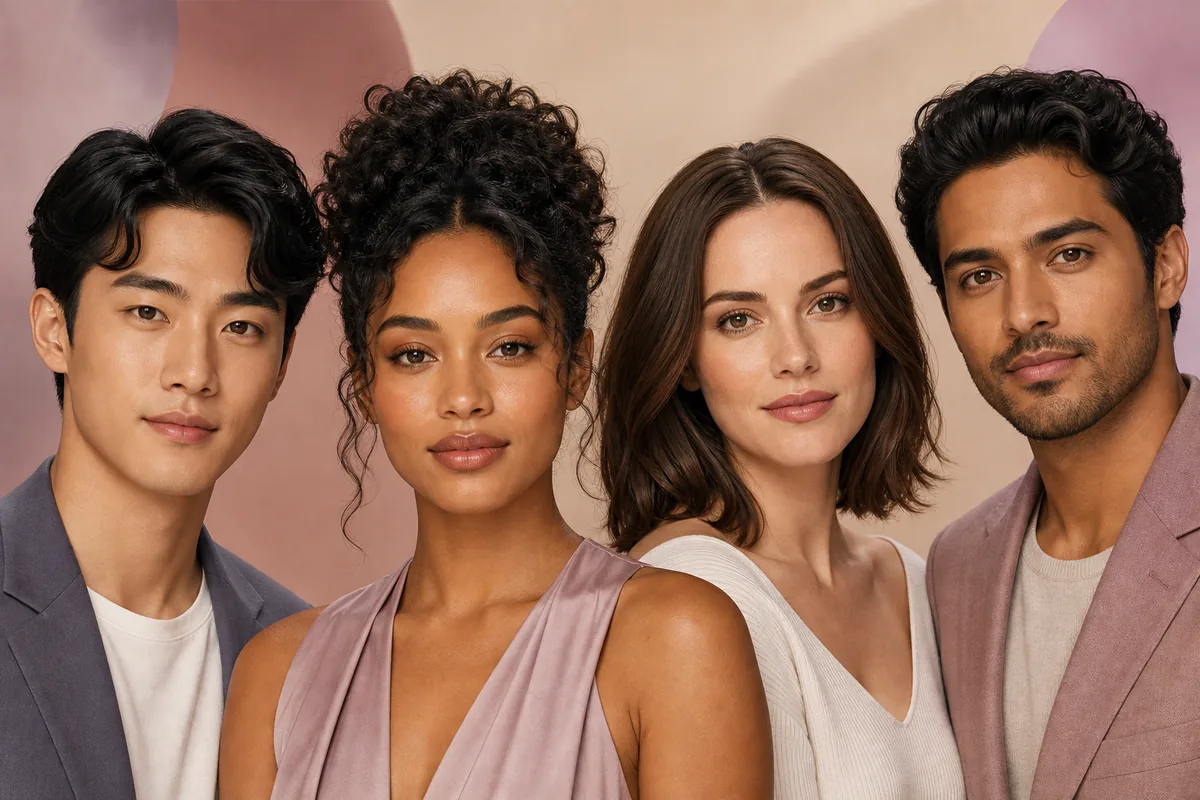
Searches for oval face shape celebrities usually combine two needs: recognizable examples and a dependable way to check your own proportions. A list of names alone is not enough because natural faces rarely fit one geometric category perfectly. This guide explains the stable cues behind an oval reading, shows where editors often disagree, and separates the celebrity-example intent from broader hairstyle or eyewear searches. The examples are practical visual references, not scientific diagnoses or claims about attractiveness.
What Defines an Oval Face Shape?
An oval face is usually moderately longer than it is wide, but it should not look dramatically stretched. The cheekbones often form the widest or most balanced part of the face. The forehead is commonly close to the cheekbone width and may be slightly wider than the jaw, while the sides narrow gradually toward a rounded chin.
The transition matters more than any single measurement. An oval outline has few abrupt corners: the forehead curves into the temples, the cheek area stays balanced, and the jaw tapers without becoming pointed. A broad smile can temporarily make an oval face look round, while a high hairstyle or a close phone camera can make it look longer than it is.
Oval is sometimes described as the most versatile face-shape category, but that does not mean every smooth or symmetrical face is oval. A round face has more width relative to length, an oblong face has more vertical emphasis, a heart face narrows more noticeably toward the chin, and a diamond face is usually most prominent at the cheekbones.
- Moderate length — The face is longer than wide, but the vertical difference remains balanced rather than strongly elongated.
- Soft jawline — The lower outline curves and tapers gently instead of ending in a square corner or sharp point.
- Balanced cheekbones — The cheek area provides structure without creating the dramatic widest point seen in many diamond faces.
- Similar upper and lower balance — The forehead and jaw do not compete strongly; the outline narrows in a smooth, continuous way.
Look for proportion, not perfection
An oval classification is most convincing when moderate length, balanced cheekbones, and a softly tapered jaw remain visible in several neutral photographs. Do not decide from one filtered selfie or one hairstyle.
8 Oval Face Shape Celebrities Often Used as Examples
These women and men are frequently described as having oval or oval-leaning faces in beauty, eyewear, and hairstyle coverage. The useful part is the cue, not the label. Review several front-facing photographs because some examples move toward heart, oblong, round, or diamond depending on expression, styling, and age.
| Celebrity | Oval cue to notice | Why the label can vary |
|---|---|---|
| Beyoncé | Balanced cheekbones, moderate facial length, and a softly tapered jaw. | Big hair or a wide smile can make the face look rounder. |
| Jessica Alba | Smooth forehead-to-jaw transition with a rounded chin. | Strong contour or side angles can create a heart-oval reading. |
| Charlize Theron | Longer-than-wide balance with an even, softly angular outline. | Slicked-back hair may make the face appear more oblong. |
| Julia Roberts | Moderate length, broad expressive smile, and gentle jaw taper. | The smile widens the cheeks and can produce a round-oval impression. |
| Kim Kardashian | Balanced upper and middle face with a curved jawline. | Contouring and camera angle may shift the reading toward heart or diamond. |
| Meghan Markle | Soft cheekbone balance and a jaw that narrows without a sharp point. | Center parts and tight updos can add visible length. |
| Emma Watson | Compact oval balance with a softly rounded lower face. | A visible forehead can create an oval-heart interpretation. |
| George Clooney | Moderate facial length and a rounded, gently structured jaw. | Age, stubble, and side lighting can make the jaw look squarer. |
Celebrity face-shape classifications are interpretive editorial references. Public photos vary by camera distance, pose, makeup, facial hair, retouching, and natural changes over time.
Oval Face vs. Round, Oblong, Heart, and Diamond
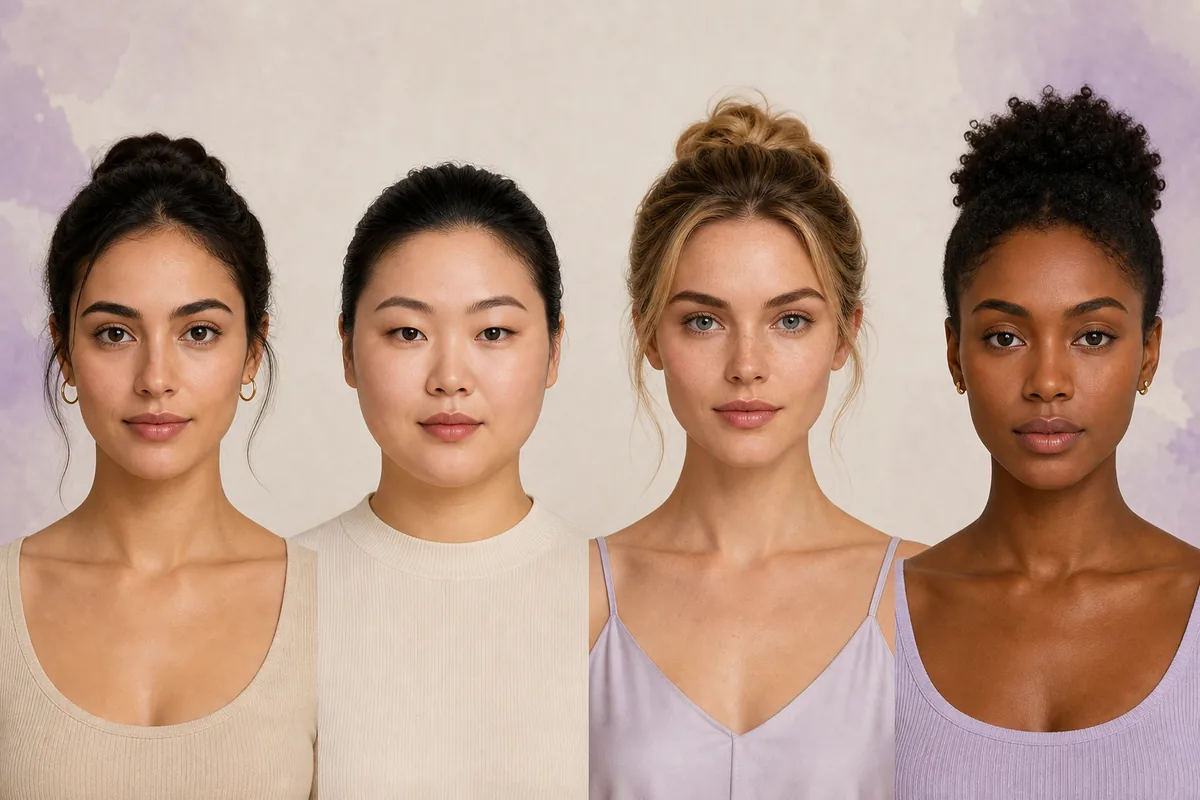
The most common confusion is oval versus round. Both can have soft jawlines, but an oval face usually has more visible length and a little more taper below the cheekbones. If width and length feel nearly equal and the cheeks dominate, round is the clearer description. Oval versus oblong is the opposite problem: an oblong face keeps similar softness but carries more vertical length through the forehead, cheeks, or lower face.
Heart and diamond faces can also look oval in soft lighting. A heart shape normally shows a broader upper face and a more obvious narrowing toward the chin. A diamond shape usually places its strongest width at the cheekbones, with a narrower forehead and jaw. Borderline labels such as oval-heart or oval-oblong are often more honest than forcing a natural face into one box.
| Face shape | Main difference from oval | Best photo check |
|---|---|---|
| Round | Width and length are closer, with fuller cheeks and less vertical emphasis. | Compare an unsmiling front photo and look for extra length below the cheekbones. |
| Oblong | The face is noticeably longer and may keep straighter side lines. | Check whether forehead, cheeks, or lower face create sustained vertical length. |
| Heart | The upper face is broader and the jaw narrows more clearly toward a smaller chin. | Compare temple or forehead width with the outer jaw corners. |
| Diamond | Cheekbones form the strongest width while forehead and jaw appear narrower. | Move hair away and see whether the cheekbone line projects beyond both upper and lower face. |
How to Check Whether Your Face Is Oval from a Photo
Use two or three unfiltered photos and compare relationships rather than tracing a perfect outline. Phone lenses, head tilt, and hair placement can change the apparent proportions enough to produce the wrong category.
- Use eye-level framing — Place the camera near eye height, step back, and use a normal lens setting instead of an ultra-wide close-up.
- Keep the full outline visible — Move heavy hair away from the temples and jaw without pulling the skin or changing your natural hairline.
- Compare length with width — An oval face should look moderately longer than the cheekbone width, not nearly equal like a round face or strongly stretched like an oblong face.
- Follow the jaw — Look for a gradual curve from the cheeks to a rounded chin rather than a broad square base or a pointed heart-like finish.
- Check the widest zone — Balanced cheekbones are common, but they should not project so strongly that the forehead and jaw look distinctly narrow.
- Repeat with a neutral expression — A wide smile lifts and broadens the cheeks, so compare it with a relaxed front-facing photo before deciding.
Female Celebrities and Male Actors with Oval Faces
Female celebrities with oval face shapes appear often in hairstyle and makeup guides because a balanced outline can be shown with many different cuts. Beyoncé and Jessica Alba are useful examples of smooth taper and even upper-to-lower balance. Charlize Theron and Julia Roberts can read more elongated in some images, while Kim Kardashian and Meghan Markle may look oval, heart-oval, or slightly oblong depending on contouring, hair placement, and camera angle.
Emma Watson is another helpful borderline example. A softer hairstyle can emphasize oval balance, while a pulled-back style may make the forehead and chin relationship look more heart-shaped. That variation is exactly why one label should not be treated as permanent biometric fact.
How Hair, Glasses, Facial Hair, and Photos Change an Oval Face
Oval faces are often called easy to style because the proportions are already balanced, but visual choices still change the apparent outline. Height at the crown adds length, heavy side volume adds width, straight center parts emphasize symmetry, and low layers can make the jaw look broader. Glasses with strong corners can add structure, while oversized round frames may make the middle of the face look wider.
For men, beard shape can matter more than haircut in a single photograph. Full sides add lower-face width and can make an oval face look squarer; a longer goatee adds vertical emphasis and can make it look oblong. Photography can override both effects: close wide-angle selfies enlarge central features, high angles shorten the jaw, and three-quarter poses hide one side of the face.
| Factor | What it can change | Better identification tip |
|---|---|---|
| Hairstyle | Crown height adds length; side volume adds width; fringe can shorten the visible forehead. | Check one photo with hair away from the outline. |
| Glasses | Large round frames emphasize width, while angular frames add corners and structure. | Use a second photo without glasses to judge the underlying outline. |
| Facial hair | Full sides widen the jaw; a long chin beard increases vertical emphasis. | Follow the natural jaw edge beneath the beard rather than the beard silhouette. |
| Camera and pose | Close lenses enlarge the center; high angles shorten the jaw; three-quarter views hide width. | Use an eye-level photo taken from a moderate distance. |
How Oval Face Shape Affects Celebrity Look-Alike Matches
Face shape is only one part of a celebrity resemblance. Two people with oval faces may look unrelated if their eye spacing, brow shape, nose, mouth, cheek volume, or expression differs. Conversely, a person with an oval-heart face can match an oval celebrity when the eyes, smile, and styling align strongly in one photo.
For a more useful result, upload a clear single-person portrait, avoid beauty filters, and compare both a neutral and smiling image. Read the feature explanation instead of treating the first celebrity name as a verdict. A good match should explain which visible cues agree and which differ.
FAQ About Oval Face Shape Celebrities
Last updated: July 30, 2026