Face Shape for Men: How It Affects Celebrity Look-Alike Matches
A practical guide to male face shapes, photo angles, jawline cues, hairstyles, glasses, and why your celebrity match can change from one selfie to another.

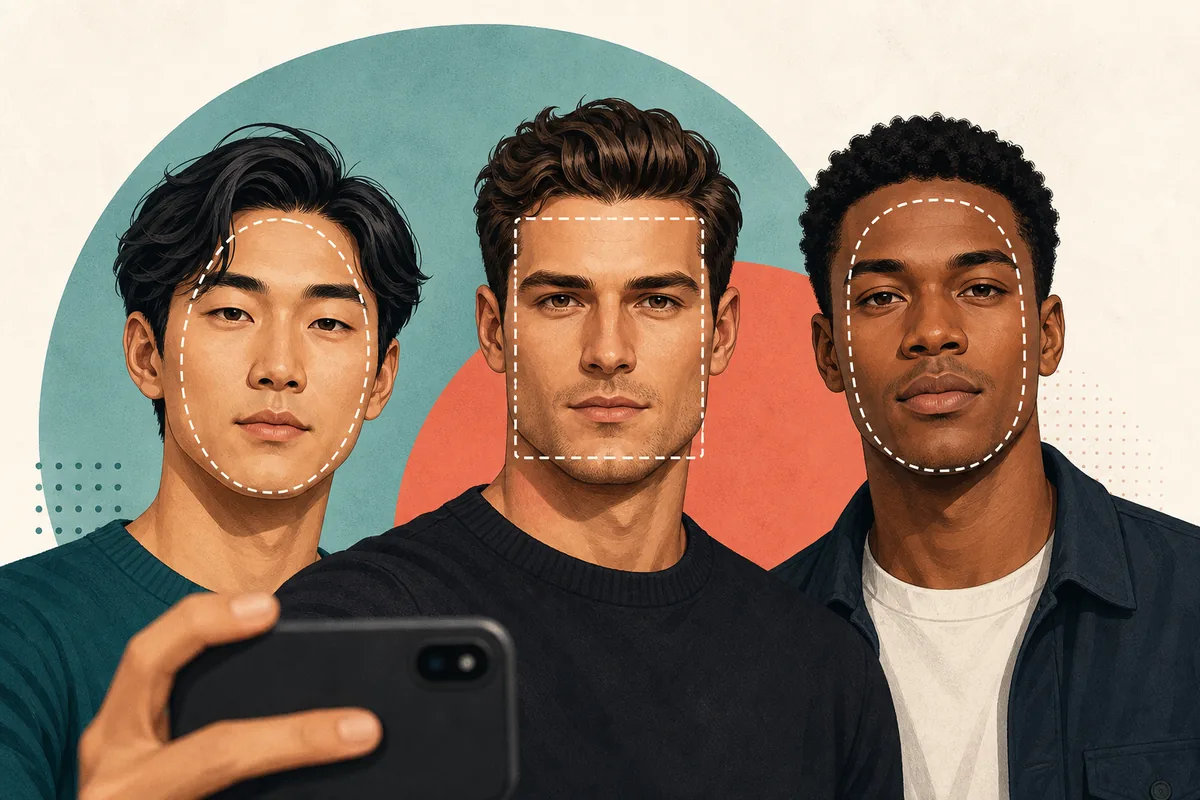
Table of Contents
Searches for face shape for men often start with haircuts or glasses, but the same idea also explains why celebrity look-alike results can feel accurate in one photo and surprising in another. A look-alike tool reads the whole face pattern. The outline of the face is one of the first signals: it frames the brows, eyes, nose, mouth, jaw, and chin before the system compares smaller details.
Why Face Shape Matters for Male Celebrity Look-Alikes
Male celebrity matches are strongly affected by the face outline because many actors, singers, athletes, and public figures are remembered by a recognizable silhouette. A square jaw can point toward rugged actor comparisons. A longer oval or oblong face can push results toward classic leading-man or model-like references. A rounder outline may make smile and cheek cues more important.
This does not mean face shape decides everything. Eye spacing, brow weight, nose bridge, lip shape, facial hair, hairstyle, age cues, and expression still matter. Face shape simply gives the match a starting frame. If the frame changes because the camera is tilted, the light is harsh, or the jaw is hidden by shadow, the celebrity result may shift.
For men, styling can also exaggerate the outline. Beard edges sharpen the jaw. Volume on top can lengthen the face. Glasses can widen the upper face. That is why a useful look-alike test should separate structure from styling before treating one result as the final answer.
Think frame first, details second
Use face shape as the broad frame, then check whether eyes, brows, nose, smile, and jawline support the same celebrity comparison.
Main Face Shape Types for Men
Most people sit between categories, so use these as practical clues rather than strict labels.
| Face shape | Common signs | Celebrity-match clue |
|---|---|---|
| Oval | Face length is slightly longer than width, with a softly rounded jaw and balanced forehead. | Often produces flexible matches because the outline does not dominate one feature. |
| Square | Forehead, cheekbones, and jaw feel similar in width; jaw corners look defined. | Can point toward actors known for a strong jaw, rugged styling, or angular face structure. |
| Round | Face width and length feel closer, with softer cheeks and a less angular jaw. | Smile, cheek movement, and eye expression may drive the resemblance more than jawline. |
| Oblong | Face looks noticeably longer than wide, often with a longer chin or forehead. | Can shift matches toward tall-face leading-man, model, or mature actor references. |
| Heart | Forehead or cheekbones are wider, then the lower face narrows toward the chin. | Upper-face balance, brows, and chin shape can become the strongest match cues. |
| Diamond | Cheekbones are the widest point, with a narrower forehead and jaw. | Cheekbone height and side-lighting can strongly affect the perceived celebrity match. |
How to Check Your Face Shape from a Selfie
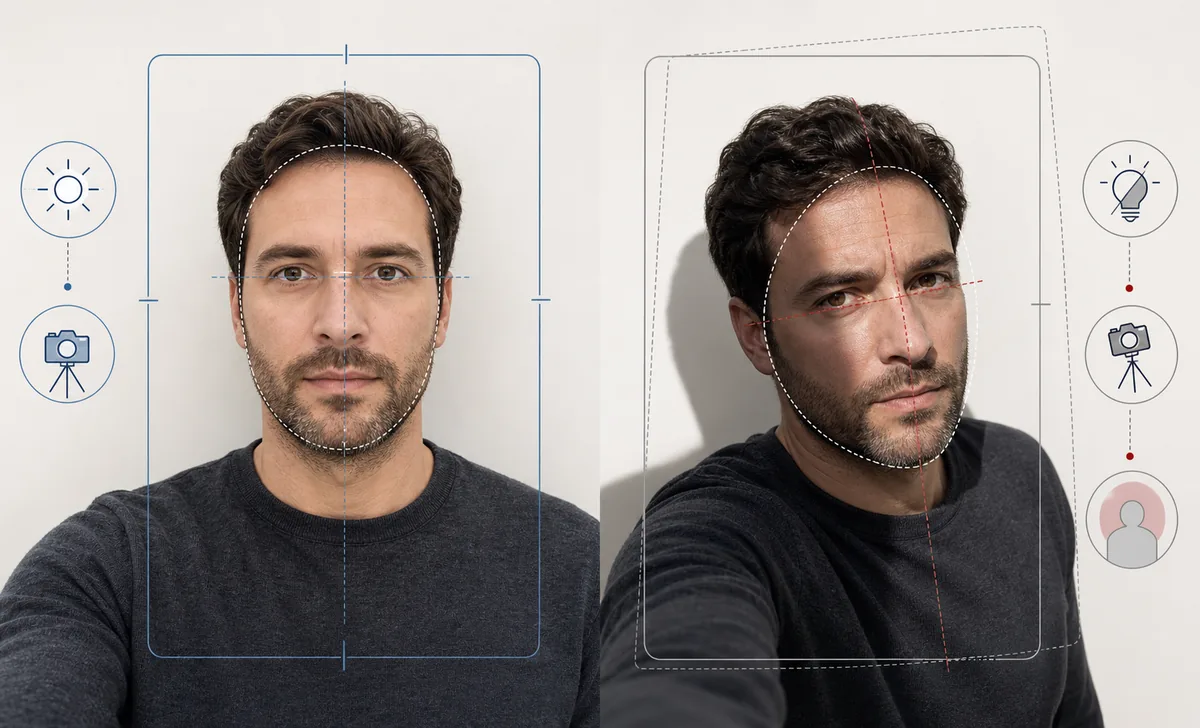
You do not need a perfect measurement system. A clean comparison photo is usually enough for a practical read.
- Use a front-facing photo - Keep the phone level, center the face, and avoid wide-angle distortion from holding the camera too close.
- Look at length versus width - Ask whether the face appears clearly longer than it is wide, balanced, or compact and rounded.
- Compare forehead, cheekbones, and jaw - Notice which area is widest and whether the jaw is square, tapered, soft, or narrow.
- Check the chin - A pointed, rounded, long, or flat chin can move the face toward heart, oval, oblong, or square readings.
- Repeat with one neutral and one smiling photo - Smiling changes cheek and jaw cues, so a stable match should make sense across both photos.
Haircuts, Glasses, and Photo Choices Can Change the Read
A face-shape guide is most useful when it helps you make better choices. Hair volume, beard lines, glasses width, and camera distance all change how the outline is perceived. That is why haircut and glasses advice often appears in face-shape searches, while celebrity look-alike tools use the same cues to explain resemblance.
When testing a celebrity match, keep the first photo simple. Then try one styling change at a time if you want to understand whether the match comes from bone structure or presentation.
- Hair height - More volume on top can make round or square faces read longer.
- Beard edges - Sharper beard lines can make a soft jaw appear more square or angular.
- Glasses width - Wide frames can emphasize the upper face, while narrow frames can make cheek and jaw width stand out.
- Camera angle - Low angles exaggerate the jaw and chin; high angles can shorten the lower face.
- Lighting - Side shadows can make one cheekbone or jaw edge look stronger than it really is.
How to Use Face Shape in Celebrity Look-Alike Results
After you get a celebrity match, do not judge it only by the name. Ask what the match shares with your photo: face length, jawline, brow weight, cheekbone width, eye spacing, smile shape, or styling. If the shared cue is only hairstyle, the result may be entertaining but less stable. If the face outline and several details line up, the comparison is more believable.
If you specifically want male performer comparisons, use the actor-focused page after checking your general celebrity match. If the result is too broad, a narrower actor pool can make the face-shape signal easier to interpret.
Face Shape for Men FAQ
Notes and Sources
- Similarweb keyword generator validation on July 2, 2026 showed 'face shape for men' as an informational low-difficulty cluster with phrase-match, related-keyword, and question-keyword support.
- Semrush fallback on July 2, 2026 supplied search-volume and KD checks for related terms such as 'face shaper for men', 'face shapes for men', and haircut/glasses variants.
- This guide treats face-shape categories as practical visual cues, not identity, attractiveness, medical, or biometric claims.
Last updated: July 2, 2026