Square Face Shape Celebrities: Examples and Identification Guide
Learn the structural cues behind a square face, compare commonly cited celebrity examples, and check how camera angle, hair, and expression change the result.


Table of Contents
Lists of square face shape celebrities are most useful when they teach you what to notice. The goal is not to place every face into a rigid box. It is to compare proportions: forehead width, cheekbone width, jaw width, face length, and the amount of taper toward the chin.
What Defines a Square Face Shape?
A square outline tends to look balanced from top to bottom. The sides of the face appear relatively straight, the forehead and jaw occupy similar visual width, and the chin looks broad or gently flat rather than sharply pointed.
A strong jaw does not automatically mean a square face. An oblong face can also have a defined jaw, while a round face can have similar width and length. The deciding pattern is the combination of width balance, side lines, chin shape, and overall length.
- Width balance - Forehead, cheekbones, and jaw appear close in width.
- Defined lower face - Jaw corners remain visible instead of narrowing quickly into the chin.
- Moderate length - The face is not dramatically longer than it is wide.
- Straighter outline - The side contour has less curve than a round or oval face.
Use a pattern, not one feature
Check at least three cues in a neutral, front-facing image. Hairstyle, beard lines, makeup, smiling, and wide-angle lenses can all make the outline look more or less square.
Square Face Shape Celebrity Examples
The names below are commonly used by beauty and style editors as visual references. Face-shape labels are interpretive, and the same person may look softer, longer, or more angular in different photos.
| Celebrity | Face-shape cue | Photo note |
|---|---|---|
| Angelina Jolie | Broad, defined lower face with visible jaw corners | Updos and front-facing portraits make the width balance easier to see. |
| Olivia Wilde | Angular jaw with a balanced upper face | Side lighting can exaggerate the jaw; neutral lighting gives a fairer comparison. |
| Sandra Bullock | A softer square outline with a broad lower face | Smiling rounds the cheeks, so compare neutral and smiling photos. |
| Demi Moore | Straight side contours and a clear jawline | Long hair can visually lengthen the face without changing its structure. |
| Henry Cavill | Broad forehead and strong, balanced jaw | Facial hair can sharpen the lower outline; use clean-shaven references too. |
| Brad Pitt | Square-to-rectangular proportions with a defined jaw | Age, hairstyle, and camera angle can shift the face toward oblong. |
| David Beckham | Structured jaw and relatively balanced widths | Beard edges and short hair often make the square pattern more obvious. |
| Pedro Pascal | Soft-square lower face with strong cheek and jaw cues | Expression and beard volume can soften or widen the perceived outline. |
These are editorial examples, not biometric diagnoses. Use them to learn proportions, not to claim an exact face category for a real person.
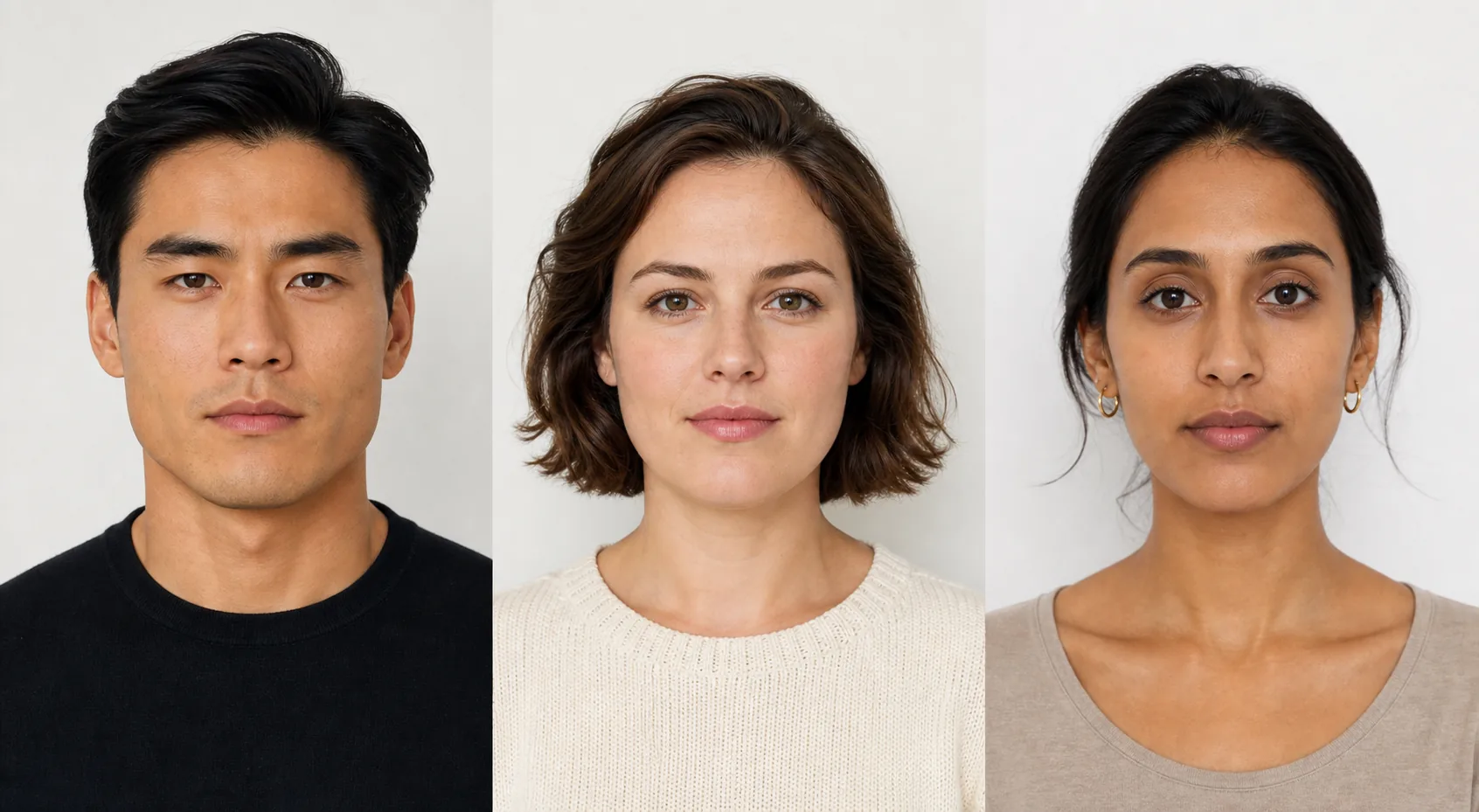
Soft Square vs. Angular Square Faces
A soft square face keeps the basic width balance of a square shape but has rounded jaw corners, fuller cheeks, or a less flat chin. The outline reads structured without looking sharply geometric.
An angular square face shows straighter sides and more visible jaw corners. Lighting, body composition, age, and expression can move the same face between soft and angular in photographs, so the distinction should remain flexible.
How to Check Your Face Shape from a Selfie
Use two or three simple photos instead of measuring one heavily styled image.
- Choose a level camera - Use a front-facing photo with the phone at eye height and not too close to the face.
- Move hair away from the jaw - Keep the forehead and jaw corners visible without pulling the skin.
- Compare the three widths - Look at the forehead, cheekbones, and jaw rather than focusing only on the chin.
- Check length and taper - Notice whether the face is much longer than wide and how quickly it narrows below the cheekbones.
- Repeat with a neutral expression - A smile widens the cheeks and can make a square face look rounder.
- Confirm across photos - A stable face-shape reading should still make sense in another evenly lit image.
How Square Face Shape Affects Celebrity Look-Alike Matches
Face shape acts as a broad frame in a celebrity comparison. A balanced forehead and jaw can move the match toward actors, singers, or public figures with a similarly structured silhouette, even when smaller features are different.
A useful match still needs support from eye spacing, brow shape, nose, lips, smile, age cues, and expression. If the result only shares a jawline, treat it as a partial resemblance rather than a convincing doppelganger.
For a cleaner comparison, upload a neutral, front-facing image first. Then try a second photo with the same lighting and a mild smile. Consistent names or feature patterns are more informative than one dramatic result.
Glasses, Hair, Beards, and Photos Can Change the Read
Styling changes perceived proportions, which is why best-glasses and haircut questions often appear beside celebrity examples. These choices can balance or emphasize the structure, but they do not change the underlying face shape.
| Factor | Visual effect | Practical tip |
|---|---|---|
| Glasses | Angular frames repeat the jaw geometry; rounder frames add contrast. | Choose by fit and comfort first, then decide whether you want contrast or emphasis. |
| Hair volume | Height on top can make the face look longer; width at the sides can make it look broader. | Compare your face with hair pulled back before judging the structure. |
| Beard lines | Sharp cheek and neck lines can make the jaw appear more angular. | Check at least one photo with lighter facial hair or a visible jaw edge. |
| Camera distance | A close wide-angle selfie can enlarge the center and distort width. | Step back and use a modest zoom or portrait lens. |
| Expression | Smiling lifts and widens the cheeks while softening the jaw corners. | Use both neutral and smiling photos for a stable read. |
Square Face vs. Similar Face Shapes
Use the nearest competing shape to test your conclusion.
| Shape | Main difference | What to check |
|---|---|---|
| Round | Similar width-to-length balance, but the jaw and side contours are more curved. | Look for visible jaw corners and straighter sides. |
| Oval | The face is longer and tapers more gently toward a narrower jaw. | Compare face length with the width at the cheekbones. |
| Oblong | The jaw may be square, but the face is noticeably longer than wide. | Check vertical length before labeling a strong jaw as square. |
| Heart | The forehead is wider and the lower face narrows toward a smaller or pointed chin. | Compare forehead width with jaw width. |
| Diamond | Cheekbones dominate while the forehead and jaw are narrower. | Look for the widest point at the mid-face rather than the jaw. |
Frequently Asked Questions
Last updated: July 10, 2026