Doppelganger Meaning: What Is a Doppelganger?
A clear guide to the definition, German origin, look-alike difference, facial resemblance, folklore, and modern celebrity-match use of the word.

On this page
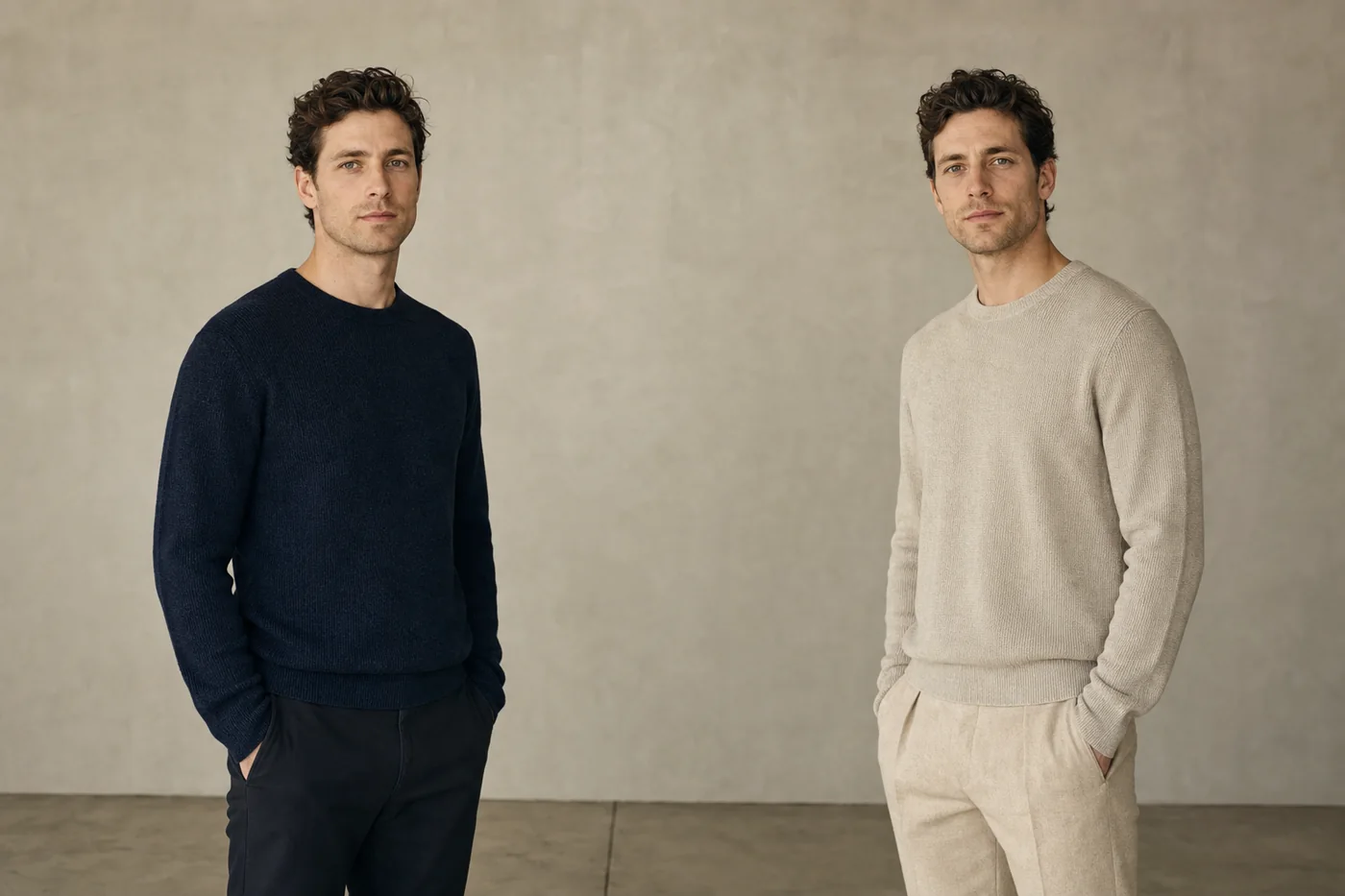
If you searched for doppelganger meaning, the shortest useful definition is “an unrelated person who looks unusually similar to someone else.” The term can describe a stranger, a historical portrait, a celebrity match, or a fictional double. It does not prove a family relationship, shared identity, or identical genetics. The strength of the word comes from degree: many people look a little alike, but a doppelganger resemblance feels close enough to be surprising.
What Does Doppelganger Mean?
In modern usage, a doppelganger is someone who closely resembles another person. Dictionaries commonly describe the person as a double or look-alike, often without requiring any biological relationship. The spelling doppelgänger preserves the German umlaut, while doppelganger is the standard English keyboard spelling; both refer to the same idea.
The word is stronger than a casual comparison such as “you have the same smile.” A convincing doppelganger match usually combines several cues: overall face shape, spacing of the eyes, brow line, nose proportions, mouth shape, jaw contour, hairline, age range, expression, and sometimes styling. A single shared feature rarely creates the full effect.
Context matters. Two people may look like doubles in one front-facing photo and much less similar from a side angle, in different lighting, or with a different hairstyle. That is why a photo-based match should be treated as a resemblance judgment rather than identity evidence.
Plain-English definition
Doppelganger means an unrelated double: a person whose appearance is strikingly similar to someone else's.
Where Does the Word Doppelganger Come From?
Doppelganger comes from German. The elements are commonly explained as Doppel, meaning double, and Gänger, meaning walker or goer. The literal image is a “double-goer” or “double-walker.” English adopted the term and gradually broadened it from a literary or uncanny double to an everyday label for a very close look-alike.
The German spelling is Doppelgänger. English writing often drops the umlaut and uses doppelganger. The frequent misspelling doppleganger reverses letters in the first half of the word; people will understand it, but doppelganger is the preferred English spelling.
Because the word traveled through literature and folklore, it can still sound eerie. In ordinary conversations, however, calling someone your doppelganger usually means only that the resemblance is unusually strong.
Doppelganger vs Look-Alike vs Identical Twin
A look-alike is the broadest term. It can describe people who share a general vibe, a few facial traits, a hairstyle, or a similar style. A doppelganger is a narrower, more emphatic kind of look-alike: the resemblance appears unusually close or double-like. Neither word requires the people to be related.
An identical twin is different because the similarity begins with a biological relationship and shared origin. Identical twins can still become visually less alike through age, health, lifestyle, expression, grooming, and other environmental factors. Conversely, unrelated doppelgangers may align in a surprising number of visible features without being twins.
Celebrity matching uses the terms loosely. A result labeled celebrity doppelganger normally means “closest famous-face resemblance in this photo,” not a claim that you are an exact copy of that person.
- Look-alike — Any noticeable resemblance, from loose to strong.
- Doppelganger — An unusually close unrelated resemblance that feels double-like.
- Identical twin — A biologically related twin from the same fertilized egg.
Why Can Unrelated People Look Alike?
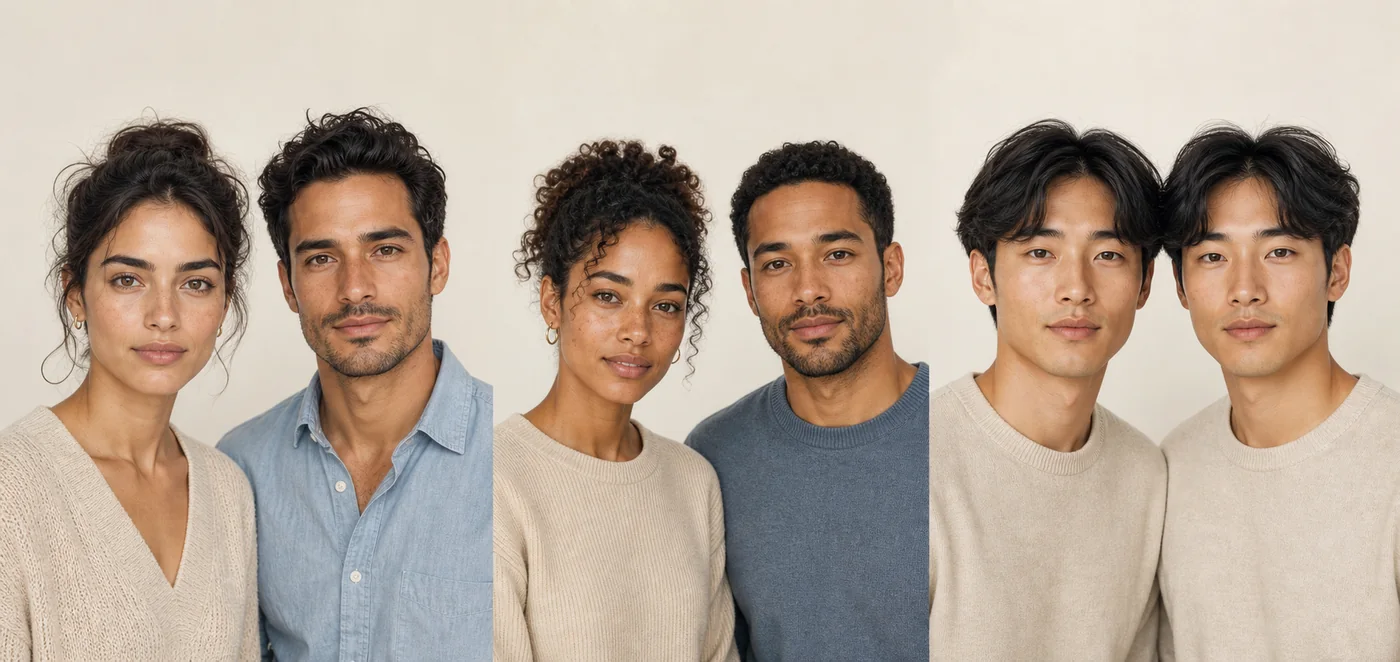
Human faces vary across many dimensions, but observers pay special attention to a smaller set of recognizable proportions and feature combinations. When two people share several of those combinations, the brain can group them as highly similar even when many small details differ.
Research on unrelated look-alikes has found that some strongly resembling pairs also share genetic variants connected with facial traits. That does not mean every apparent double has the same explanation, and it does not turn resemblance into proof of kinship. It shows that similar visible outcomes can sometimes arise from overlapping biological patterns in unrelated people.
Photography can amplify or weaken the effect. Camera distance changes perspective; wide-angle lenses can enlarge the center of the face; shadows alter the jaw and nose; smiling changes the cheeks and eyes; makeup, facial hair, glasses, and hairstyle add powerful identity cues. A fair comparison uses similar angles, neutral lighting, limited filters, and more than one photo.
- Facial geometry — Shared proportions in the eyes, nose, mouth, cheeks, and jaw can create a strong first impression.
- Styling cues — Hair, facial hair, glasses, makeup, and clothing can make a moderate match feel stronger.
- Photo conditions — Angle, lens, light, expression, and filters can change which features dominate.
- Pattern recognition — People quickly recognize familiar combinations and may overlook smaller differences.
Doppelganger Myths, Folklore, and Modern Meaning
Older stories sometimes portray a double as an omen, a ghostly counterpart, or a sign of danger. Literature also uses doubles to explore identity, conscience, hidden desires, and the fear of being replaced. Those themes explain why the word can feel more dramatic than the neutral term look-alike.
There is no reason to treat meeting someone who resembles you as a supernatural warning. The modern search intent behind “what is a doppelganger?” is usually linguistic or visual: people want a definition, an origin, or help distinguishing a close match from an ordinary resemblance.
A useful way to read online claims is to separate folklore from evidence. Stories can be culturally interesting without functioning as scientific explanations.
How to Look for Your Celebrity Doppelganger
For a photo comparison, start with a clear image containing one visible face. Use even front lighting, keep the camera near eye level, avoid beauty filters, and leave the full jawline and hairline visible. If a match seems surprising, repeat the test with a second photo rather than trusting one result.
Compare the explanation, not only the celebrity name. A useful match should identify which visible cues are similar and where the faces differ. Results can change because a tool's candidate database, image quality, age estimates, styling, and ranking method all influence the final list.
Treat the result as entertainment and visual comparison, not face identification. Do not use a look-alike result to verify identity, infer family relationships, or make sensitive decisions about another person.
Best next step
Use two clear photos and look for a repeated match supported by several shared facial cues, not one dramatic result from a filtered or unusual image.
Doppelganger, Look-Alike, and Twin Compared
The terms overlap in casual speech, but they answer different questions.
| Term | Relationship required? | Typical similarity | Best use |
|---|---|---|---|
| Doppelganger | No | Striking, multi-feature resemblance | An unrelated near-double or famous-face match |
| Look-alike | No | Any noticeable resemblance | Broad everyday comparisons |
| Identical twin | Yes | Usually strong, with biological origin | Describing monozygotic siblings |
| Impersonator | No | Natural or deliberately created | Performance using styling, voice, or mannerisms |
Doppelganger Meaning FAQ
References
- Merriam-Webster: doppelgänger — English definition and word history.
- Cambridge Dictionary: doppelgänger — Modern English usage and definition.
- Cell Reports: Look-alike humans identified by facial recognition algorithms show genetic similarities — Research on unrelated people with strong facial resemblance.
Related Guides and Tools
- Celebrity Doppelganger Finder — Upload a clear selfie for a famous-twin style match.
- Celebrities That Look Alike — See famous pairs and the facial cues behind their resemblance.
- Actors That Look Alike — Compare actor doppelganger pairs and photo contexts.
- Best Celebrity Look-Alike Apps and Sites — Choose a tool by match style, privacy, and result detail.
Last updated: July 16, 2026